Category: Archives

  • From the Archives: It’s s’posed to be like that! What’s the worst (best) excuse you’ve had?

    From the Archives: It’s s’posed to be like that! What’s the worst (best) excuse you’ve had?

    A third article I originally wrote for the BeerHeadZ website, first published in October 2018.

    We’ve all had it. That disappointing moment after you’ve handed over your hard-earned wonga and the barkeep plonks a pint in front of you and you know, by sight or smell alone that it just ain’t right.

    That’s OK, these things happen from time to time. It’s how the bar person deals with it that counts. Most of the time it’s dealt with professionally and satisfactorily. But the occasionally I’ve had some brilliant BS excuses as to why there’s nothing wrong with the beer.

    The one I would think most of us have had is “it’s supposed to be like that”, but what other reasons have you been given to excuse that sub-standard beer? I’ll start the ball rolling by giving you the best (excuse) I’ve had.

    During a pub crawl in Bradford several years ago, we got caught in a torrential thunderstorm, so we darted into the nearest pub (which happened to be a Wetherspoons) for shelter. I ordered a pint and it was duly delivered to the bar top, looking like soup (this was well before the trend of unfined beer started). I complained that it wasn’t right and the bar man offered to change it for another beer. I selected another, which looked exactly the same. I was offered a third, again cloudy. When I asked what was going on, the chap told me he was having trouble with all the beers in the cellar because of the static build up in the air due to the storm! I must admit I was so amazed by the ingenuity of his excuse that I didn’t even question it.

    So what’s the best excuse you’ve had for a bad pint? Please let me know in the comments below.

  • From the Archives: How much do you value your pint?

    From the Archives: How much do you value your pint?

    Here’s a second article I first wrote for the BeerHeadZ website as a follow-up to my ‘Journey with beer‘ post, which originally appeared in October 2019.

    Beer has historically been perceived as ‘the drink of the working man’ and, as such, has been expected to be cheap and accessible to all. But is this still the case now? ‘Cheap’ beer is certainly still available – just walk into your nearest ‘cut-price’ local – You might strike lucky, but the vast majority of the time you will receive a competent but bland and ordinary pint. To get a pint that’s finely crafted and bursting with flavours, you should expect to pay more. I will try to convince you why in this article!

    The recent BeerHeadZ in-house survey established that 84% of our customers consider quality over price of greater importance. Yet some pubgoers still complain about the cost of their pint; Why should they pay more than a ‘pub down the road’? Well, firstly, you’re probably not getting like-for-like. As mentioned above, your £2.80 isn’t generally going to get you a beer that’s bursting with the hop flavours and aromas that we’ve all come to love. You’ll most likely get a brown, malty, insipid old-fashioned beer. And for some, that’s just fine. But, if you want flavour, you just HAVE to pay for it. It mostly comes down to ingredients and craftsmanship. There may be a bit of profiteering by some brewers, but as in all purchases, you pays your money, you makes your choice. Let’s have a closer look at where the beer costs come from.

    It’s hard to pin down, but for simplicity’s sake let’s say the ‘craft’ revolution started ten years ago, a nice round number. So, what’s happened in the last ten years? Beer prices, on average, have risen 86p (source: Office of National Statistics). The average price of a pint in Nottinghamshire today is £3.67 (source: 2020 Good Pub Guide), meaning an average pint was £2.81 a decade ago, the average year-on year increase being a little under 3%.

    Apart from taxes and duty, there are many other major factors to take into consideration affecting the rise in the price of your pint. For brewers there has been the rise in the price of basic ingredients, particularly hops, fuel (gas and electricity as well as diesel) and the general rise in the costs of running a business. For the pubs there have been continuing increases in rents, staff pay, pensions, and licenses for this, that and the other. The onslaught is relentless, and you should not underestimate the constant pressure some pubs are continually under. The drastic drop in footfall is another major factor – people are simply not using the pub as much as they used to only a few years ago. This creates a vicious circle: Less customers lead to price increases to keep business afloat. Increased prices put even more customers off, the cycle goes on.

    Many brewers are just managing to eke a living from their business. Dean Baker, brewer at Baker’s Dozen who runs his one-man brewery in Ketton, told me that he considers brewing “a labour of love” rather than a proper money-making business. Indeed, many smaller brewers are making between just £11 and £13 (the cost of around three pints!) on a firkin (nine gallons) of beer which is sold for a fair price, or around £200 per brew day (not every day is a brew day, many breweries only brewing once or twice a week). Not a lot for a day’s back-breaking graft, when you consider a skilled joiner or plumber could probably command £250 every day.

    Firstly, let’s look at just a couple of the brewer’s costs:
    a) Duty – Around 49p of a £4 pint is tax (source: Campaign for Real Ale); The Government’s beer duty escalator alone has seen a whopping 42% increase in tax on your pint since 2009. b) Hops – Although the price of hops has come down in recent years, the shear amount of hops going into some beers is staggering; We recently sent our managers on a BeerHeadZ brew day at Baker’s Dozen. Almost £400 worth of hops went into the 18-cask brew, equating to a gob-smacking (literally) 27p worth of hops IN EVERY PINT! These two alone take up 76p worth of your pint!

    Gazza Prescott, formerly brewer at Steel City/Hopcraft/Pixie Spring and now brewing together with Sue Hayward as Team Toxic, explains the difference between bulk and craft beer far more eloquently than we ever could (big thanks for his contribution to this article):

    1) Why people should expect to pay more for quality beer nowadays.

    First off, let’s nail a common misconception… quality in beer isn’t how hoppy or sour it is, but it’s how well it’s made! This is often overlooked by modern beer aficionados who relate price and flavour impact with quality, but surprisingly it’s usually the big brewers, with their money to invest in laboratories, modern and efficient brewkit and cutting-edge cleaning/process enhancements, who make the technically ‘better’ beer. Their bitter might not taste as good as your kiwi milkshake IPA, but it’s probably – technically – a better beer with less wild yeast, bacteria and off-flavours and longer shelf life and higher stability, both much prized by retailers.

    In general, beer is made to either a budget or an ideal; these are mutually exclusive and aren’t easy to reconcile. Craft brewers are, in general, very creative and invent recipes to give maximum flavour and maximise the aspects of character they want the beer to exhibit. If a budget dictates the cost of the beer compromises will invariably have to be made by cutting ingredients to fit the budget. Both are totally legitimate ways to create beer, but to create interesting, quality and boundary-pushing beer the recipe dictates the budget, not the other way around!

    Thus, beers made under the brewer’s absolute control (i.e. not to a controlling budget) are generally the ones which have the most interest and flavour, and those which are of interest to so-called ‘craft beer’ drinkers.  So, the rule goes that if you want more interesting, flavoursome beer then you’ll have to pay more for it, but price doesn’t guarantee the beer will be of high quality or actually well-constructed… although you’ll invariably be getting an interesting brew.

    The final aspect is that people mistake “good beer” with “beer I like”; this means people saying some beers they don’t like (sours are a common one!) are “rubbish” whereas what they really mean is “I don’t like this beer/beer style”. It’s a huge difference and distinction must be made between well-made beer and beer you actually like the taste of! After all, American Budweiser is, according to various studies, the most consistently made and of the highest benchmark quality in the world, despite most beer lovers thinking it’s rubbish – the quality is top-notch, but the recipe and flavour isn’t aimed at the craft beer market!

    But, what is ‘craft’? The best definition I’ve heard is “the brewer creates his recipe and makes the beer to reflect his recipe; if he works out the cost and decides to reduce things to make the recipe fit a budget then the beer is no longer craft, it’s commodity”.

    2) How other brewers’ beers compromise on ingredients to keep prices down.

    Making beer is both a process and an art form; to make the best beer you need to be on top of your game for both, sidelining one in favour of the other will invariably mean the resulting beer is lacking in some way. Quality costs money, and brewers who aim at the cheaper end of the market are, by necessity, going to have to find ways to cut the cost of making their beer, whilst those who are aligned to the ‘craft’ sector – where price isn’t necessarily a problem – can afford to invest more in the beer to get exactly what they want from it rather than what the budget dictates.

    Process is a nebulous term but encompasses everything from the raw ingredients via the brewkit itself to the procedures used to make the beer. Each of these steps is essential, but to make cheaper beer you can use cheap (and therefore, in general, poorer quality) ingredients, compromise on the equipment used to make the beer, or cut costs in the processes used to make the beer. The actual brewkit tends to be the part where the bigger companies, with their reserves of cash, can make big efficiency savings by investing in better – and more efficient – brewkit whereas smaller brewers generally have to make do with more basic and inefficient kit. The process in making beer is hard to cut costs without risking the quality of the final product, but money can be used to ‘buy’ efficiency in some areas.

    Art form is even harder to pin down but, in essence, it’s the recipe for the beer, the raw ingredients, and any extra processing required (barrel ageing, dry hopping etc). This is the part which is usually trimmed to make cheaper beer and there are many ways to go about that.

    • Malted barley is the major expense of a beer, giving the sugars to make the alcohol and a lot of the flavour, so cheaper malt is used to ‘bulk out’ the recipe, with additions of small amounts of more flavoursome malt/grain (unmalted grain is cheaper than malted grain as it hasn’t undergone the extra malting process) to make up for the shortfall in flavour. Any loss of efficiency with cheaper grain would be offset by the expensive brewkit used by big brewers which is better able to wring every last drop of sugar from the grains whereas small brewers’ kit simply can’t do that.
    • Hops are the second major expense for a brewer (but not usually a big brewer!) To reduce a hop bill the usual tricks are to buy cheaper hops but utilise them more efficiently in the expensive brewhouse, use hop extracts which are much more efficient and cost effective than actual hops, or simply use less hops over a period of time, reducing them slightly each brew, so the customers don’t actually notice the reduction over time.
    • Other costs involved in brewing are things like yeast, cleaning chemicals and clarifying agents which can be bought in bulk by big brewers to reduce costs.
    • Process is an area where efficiencies can be made and is accepted as the second big ‘cost’ of brewing; say a beer needs two weeks’ fermenting/conditioning time (generally called ‘tank time’), where every day is budgeted to cost £1000, the obvious thing to do is to reduce ‘tank time’ overall by speeding the process up via efficiencies or things like genetically modified yeast which can ferment the beer in a fraction of the time conventional yeast takes, saving lots of money by freeing up tank space to push more beer through the system. Processes like ‘barrel ageing’ take months but can be done with powdered/chipped wood instead which, with the increased contact area of the smaller particles, takes much less time to achieve a similar (generally less good but ‘acceptable’) result.

    So, as you can see, there are many ways to make cheaper beer, but all have implications on the beer’s eventual flavour. Luckily for the bigger brewers, the market they are chasing – the bulk, high throughput draught market – cares less for flavour and interest, valuing instead cheapness, ‘bang for buck’ (a hideous term which means, in essence, the most alcohol for the price paid) and ‘drinkability’ which translates as ‘not tasting of much’ so it doesn’t scare off those who want their beer to taste of as little as possible….

    The differences between this market and the craft market are plain to see with, in plain terms, the big brewers’ markets favouring cheapness and lack of flavour whilst the craft market demands maximum flavour and creativity. The latter costs money, which is why the big brewers struggle with making inroads into the craft market, not understanding that cost reductions in craft beer mean the beer is, in essence, no longer craft but just more bulk commodity beer.

    2019 Gazza

    Many people’s perception of ‘value for money’ in beer prices is skewed too. Until fairly recently, the logic was ‘the stronger the beer, the more expensive it is’ and generally, like-for-like, this has been true. However, this is no longer the case.  Two beers with the same strength are not going to have the same price when one has been mass-produced with compromised ingredients and the other lovingly crafted with the addition of bucket loads of different hop varieties or barrel-aged for two years in bourbon casks. There are going to be big differences in pricing.

    It is also the case that some pubs are, consciously or unconsciously, selling beer at an unrealistically low price; either because (a) they are incompetent in pricing beer (e.g. if it’s X.X% it HAS to be priced at £X.XX – the old strength/cost argument mentioned above); (b) they don’t price their own overheads correctly, or (c) they sell beer as loss-leaders.

    Back in 2017, the Rake Bar in London made National headlines after selling a beer for £13.40 per pint. Since then it’s not uncommon to see craft products priced at £15 and upwards, one even being spotted in Nottingham at £24, but consider this; If you went out to a restaurant and bought a bottle of wine for £15 or £20 you probably wouldn’t bat an eyelid. Surely a pint of a lovingly crafted beer, matured in oak vats for three years with the addition of Madagascan vanilla pods and other exotic ingredients can command the same type of premium? These beers aren’t quaffing beers. They’re designed to be savoured.

    Going back to that average pint price at the beginning of this post of £3.67. Say the average person goes out and spends an entertaining three or four hours in the local and buys four pints. That’s less than £15 spent. What else could you get for that money elsewhere? Let’s try to compare…

    • Cinema ticket: around £8
    • Cup of coffee: £1.45 – £3.45
    • Two-course Indian takeaway: £20ish
    • Football home match £30ish
    • Pizza £20

    In comparison, a night out at the pub still looks pretty good value for money!

    Away from the gritty economics of how much ingredients and processes cost, let’s consider the part the pub plays. We’ve already briefly mentioned the unavoidable day-to-day running costs of a modern pub. But if you’re lucky enough to have a local that serves exciting, tasty, innovative and flavoursome beers from the country’s top brewers, these beers don’t appear out of nowhere! The managers and landlords take the extra time to source these beers from all over the country. They need to know what’s going on in the beer scene, who the best brewers are and where the latest trends are heading. And they also need to have the skill and expertise to serve every single pint in the right condition. These things also take care, time, skill and passion – qualities that may not be an identifiable ‘cost’ on a spreadsheet but should surely be able to command a small ‘premium’ over other pubs that may be a bit cheaper.

    Moreover, the pub serves a much bigger value than just a drinking venue. It’s somewhere you can start friendships, avoid loneliness, find a plumber or builder, play games, listen to bands etc. and have an opportunity to listen to a load of grumpy old blokes moaning about the weather, Brexit, and even, err, beer prices! All these qualities are priceless. The pub is a place of genuine enjoyment and long may it continue.

    Next time you’re in a pub which may appear a little pricier than other establishments, please take time to consider the points made here before deciding whether your beer is too expensive or not. Remember, pubs are still closing at an alarming rate and your custom is needed more now than ever before. Who knows, if pubs get more customers, they may be able to drop their prices!

  • From the Archives: My journey with beer.

    From the Archives: My journey with beer.

    This is an article I wrote for the BeerHeadZ website, originally published in October 2019.

    My earliest recollection of tasting beer was in the kid’s outside area of a pub, somewhere on the outskirts of Portsmouth, when I asked my dad if I could taste his beer. I took a swig and my face screwed up immediately as the bitter brown liquid hit my taste buds. “Don’t worry”, said my dad. “You’ll get used to it!” …and get used to it I did! That story is the first memory I have about my beer-drinking career but there have been many memory-making milestones along the way. Some of them are quite hazy now – the memories that is, not the beer (although many of them have been), but I’ll try to retrieve them for this article.

    The first ‘proper pint’ I ever had – that is bought for myself with my (pocket) money – was at the age of fourteen in the Railway Club in Newark. My Grandad used to take me there every Saturday evening and if I was quiet, I was allowed to sit in the corner with a brown ale whilst he and his mates played dominoes. One time I asked if I could have a beer and my Grandad said, “You’re a man now, go and buy your own.” I sidled up cautiously to the bar with my hand on the loose change in my pocket wondering if a) I’d get served and b) I had enough money. I waited my turn and asked for a pint of Forest Brown. The pint was placed in front of me and I was asked for the princely sum of… 11½p! Now, almost half a century later, I shudder to think how much money I’ve spent on beer, but consider it’s been worth every penny.

    The second price-related milestone was the price increase of Kimberley Best Bitter when it went up from 20 to 22p a pint in the Old Kings Arms in Newark, c.1978ish. “Ridiculous!” we all cried. “You can’t get five pints for a pound any more. Boycott!!!” It hasn’t all been about price of course (more on that in a later article), but mostly how the availability of quality beer and, in particular, beer styles have changed over the years.

    In the first twenty years of my journey with beer, most pubs were limited to ‘Bitter’ or ‘Mild’. If you were REALLY lucky, you may have found the occasional IPA or stout. Sometimes, if you wanted a bit of variety, you could mix the two and order an ‘alf and alf’ – half bitter/half mild mix. I wouldn’t recommend it. The brewery choice out there was very limited too, certainly in my neck of the woods. I remember stumbling into a pub in Suffolk once with some friends and finding Tolly Cobbold on the bar. We all thought it must be Christmas! How laughable that is now, but back in the day that was the reality.

    I’m not sure when the really pale beers started to become more popular, but my first experience was Boddington’s which, although not pale by today’s standards was, compared to most of the other beers at the time. I first tasted Boddies in a pub situated just yards from the brewery in Manchester sometime in the 1980’s and the beer had a lasting impression on me. Again, nothing to write home about now, but at the time it was delicious. When the first straw-coloured pales started coming through, e.g. Exmoor Gold, the whole beerscape began to change and brewers started experimenting with new-generation, new-world, imported hops. A whole new world of flavours had opened up, and I was going to be part of it!

    I often hear people in pubs (mainly older generation, to be fair) bemoaning the fact that you can’t get ‘normal’ beer any more. By ‘normal’ they mean traditional, old-fashioned brown bitter. And it’s a fact, they are actually harder to come by on bars across the country. Now, whether the Nation’s palates have actually changed, or if the hoppier, paler beers have been forced on us, it’s hard to tell. I suspect it’s a bit of both, but the fact is that ‘pale and hoppy’ sells! The focus of hoppy beers is, of course, hops. Whereas the traditional English bitters were made with predominantly English hops, modern beers use hops of which there are literally dozens of varieties (more here)  from all over the world. On my journey, there have been a few game-changers.

    Citra.
    Citra was, in my view, the hop that started off the craze for citrussy pale beers. The Citra hop, as inferred in its name, has been called the ‘most citrusy aroma hop in the world of beer’. Its characteristics of citrus, grapefruit, lime and tropical fruits, along with a harsh bitterness, changed the brewing game forever and some of the early beers that used it – such as Oakham Citra – changed drinker’s palates too. Things would never be the same.

    Sorachi Ace.
    When you’ve been drinking beer for forty-odd years, I think you might be confident that you’d tasted everything it has to offer. Wrong! The first time I tried this astounding hop was an Acorn Brewery Sorachi Ace IPA and it was one of those WOW! moments. Sorachi imparts intense lemon flavour and aroma, as well as dill, tea, coconut and coriander notes and is literally light years away in flavour from (most*) other hops. That first pint of Sorachi IPA tasted like liquid lemon cheesecake. Exquisite! The other unforgettable beer I’ve had that uses this hop is Marble’s Little Meiko. Superb! *At risk of becoming geeky, there are, to my knowledge, two other hops that have Sorachi-like qualities, the memorably named HBC 472 and HBC 438 ‘Sabro’ experimental varieties.

    Mosaic.
    Another excellent hop that changed my tastes in beer is the Mosaic. Its main characteristic is its blueberry aroma, but others include mango, stone fruit and bubble gum. It gives a beautiful mellow creaminess to the beer and distinctively stands out from other hops.

    That’s enough about boring old hops. There has been an astonishing surge in the varieties and styles of beers available these days. We are truly experiencing a golden age of beer, have no doubt. Let me tell you about some of the styles that rocked my world…

    Lambics/sours
    Lambic is probably the oldest beer style in the world, and a style embraced by the Belgians. Lambic is brewed and then fermented in shallow ‘coolships’ that are left open to the elements and spontaneously ferment from wild spores from the atmosphere to create the most acidic, face-puckeringly sour and dry beers on the planet. The inconsistency of the brews caused by wild fermentation are tempered by the careful blending of one, two, and three-year-old brews to create a consistent product. These beers are called gueuze and are some of the finest (in my opinion) examples of the brewer’s art.

    A new generation of sour beers started just a few years ago, but instead of using traditional spontaneous fermentation, they use a technique called ‘kettle souring’. This involves introducing lactobacillus into the brew, which can sour the brew in a matter of days, rather than months or years. The early versions of these beers were pretty poor in my view, but they have improved enormously over the last couple of years and are proving enormously popular. If you haven’t tried out the world of sour, what are you waiting for?

    Black IPA.
    BLACK India PALE Ale? Impossible? No, it’s a thing! Basically BIPA (sometimes called Cascadian Dark) is a traditionally brewed stout that is then charged up with citrus hops as an IPA would be, giving the roast of a stout with the hoppiness of an IPA. It works, and the first time I tasted this style really left an impression.

    Craft cans.
    Cans are shite, right? Wrong! That certainly used to be the case (and, to be fair, probably still is with a lot of mass supermarket rubbish) but the new-generation beers from cans are fresh, tasty and immensely practical.

    New England IPA.
    NEIPA is probably the last big style to emerge from the States and has caught on big in the UK. New England IPAs originated in East-coast USA and is the style personified by breweries such as Trillium in Boston. NEIPAs feature an intense, tropical fruit-centric, hop aroma and flavour. It’s heavily dry-hopped to the point of being hazy and has a fuller body, smoother flavour, and less bitter than a typical IPA. Some even have pureed fruit added, giving the beer a thick and creamy, easy-drinking texture. It is easily my favourite style of the moment.

    So there you have it. Some highlights of my journey with beer. Lock those doors, I’m not getting off the bus any time soon. It’s hard to imagine what the beer scene will look like in only ten years’ time. Over the last four or five decades we have seen the collapse of the National brewer’s stranglehold on the industry. The Beer orders inadvertently changed the face of the pub industry forever, and whilst some pubs are struggling, the best are thriving. Independent brewers have flourished in the last couple of decades since progressive beer duty was introduced. Now, we are on the crest of the Craft Beer Tsunami with young and talented brewers producing fantastic, flavoursome, innovative beers all over the country.

    Beer drinkers have, without a shadow of doubt, never had it so good. Some folks complain about the price of beer, but the fact is (quality) beer IS still value for money, and I will attempt to address that in my next article. Make the best of it while it lasts! Support your pubs or they will be gone forever.

    Please let me know your milestone beer memories in the comments below – I’d love to hear them!

  • From the Archives: Ape for Apples.

    From the Archives: Ape for Apples.

    This Brittany visit report was originally written for the Newark CAMRA newsletter in July 2005.


    Mr & Mrs. Belvoir had  a short visit to St. Barthlemy, a lovely quiet village in Brittany. Our hosts were Mike and Lynda Carrie, Newark branch CAMRA members, who moved out there about two years since and now try to earn a few Euros by letting out rooms.

    Mike was a perfect host, showing us the sights around the area and introducing us to the culture, especially the bars!

    The traditional drink in Brittany is cider, either still and cloudy similar to those made here or, more commonly, slightly sparkling and clear, although the sediment remains in the bottle.

    Available either dry (brut) or sweeter (doux), they are made on the farms where the apples are grown, the flavour obviously differing with type of apple, growing conditions, and the way in which the juice is treated after pressing.

    Cider, or cidre was available in every bar, café and supermarket we visited, although it was much more fun visiting the farms where they are made and purchasing them directly from the farmer. I won’t bore you with tasting notes; suffice to say all those sampled were very drinkable, especially from a cup and saucer, which is the traditional way in these parts!

    The Bretons are fiercely proud of their product and apparently some Breton cider-producing areas are even pressing (see what I did there?) for their own Appelation D’Origine Controle (AOC) to guarantee authentic, high-quality local production, as with French wines.

    Not so easy to find, but made from the same apples is Eau de Vie or ‘Water of Life’, a throat-ripping poteen-type brew still made by some farmers. Not sure whether this was legal, but we were served some from under the bar. I was assured that it was a really smooth sample. If it was, I would hesitate to try the rough stuff!

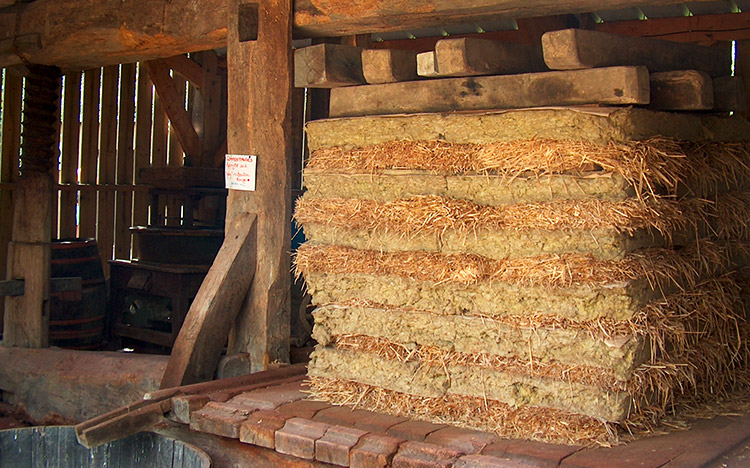
    A lot of Brittany’s cider history can be seen at the farm at Pleudihen whose outbuildings house the Muse de la Pomme et du Cidre (Apple and Cider Museum), which we also visited and where we pictured the antique still that was used to make the Eau de Vie.

    We also found some very good bottle-conditioned Breton beers, but I’ll save that for another day. Our short stay in Brittany was very enjoyable, big thanks to Mike and Lynda.

  • From the Archives: Drowning Poole.

    From the Archives: Drowning Poole.

    The second of my archive ramblings from Newark CAMRA’s newsletter is from July 2003.


    After several weeks of unseasonably warm weather, it was finally time for our planned long weekend trip south to Poole. No surprise, then that the weather broke the day I drove down to Wiltshire, raining torrentially for almost two days without stopping. Never mind, most of my holiday was spent in pubs, so it didn’t really matter!

    The first stop was to break the journey and I chose a pub from the 2003 Good Beer Guide, the Earl of Normanton in Idmiston, Wiltshire, situated about three miles away from Stonehenge.

    This was a marvellous country pub with a raised-terrace drinking area at the rear of the pub with excellent panoramic views of the surrounding Wiltshire countryside. Alas, it wasn’t much use this wet July evening, except for a few pigeons and care-free sheep. Instead, we chose to sit inside the large horseshoe-shaped bar and sample the beers.

    Although a free house, the pub had a tie-in with Cheriton brewery and beers on offer were Cheriton Pots Ale, Village Elder and Best Bitter. Also on was Hopback Summer Lightning. I tried them all, and although they were all in excellent condition, the Village Elder stood head and shoulders above the rest and I settled on that for the rest of the evening.

    After six pints and a very good home-cooked supper, we retired to our B&B which was a recently converted barn across the courtyard from the pub. Thanks to the half-dozen I’d consumed, I slept soundly and didn’t hear the intruder trying to get in, who was consequently chased away by the landlord at 3 a.m.

    I  did, however, hear our early-morning call, which took the novel form of a car leaving the bend and smashing into a wall about six inches away from our chalet and two feet away from the rear of our parked car! Over breakfast I was assured that not all guests receive this special treatment!

    Friday morning we continued on to Poole, our B&B situated on the road, about central to our planned pub crawl and only ten minutes walk from the town centre. Some more sightseeing took up the afternoon, and then on with the all-important bit, exploring the pubs. The 2003 GBG lists eight, plus an Inn Brief, and I intended to do them all, bar the one out-of-town.

    Friday evening we walked down to the quayside and found a charming little boozer, the Poole Arms. Cosy and one-roomed, its narrow frontage is completely covered in green tiles. Although it wasn’t GBG listed, I couldn’t pass it without going in, and was rewarded with an excellent pint of Ringwoods Best, which was enjoyed sitting outside on the quayside, people-watching for half-an-hour.

    Apparently, the pub is up for sale and the owners want to be very careful who they sell it to, lest it falls into the hands of someone who doesn’t care about pub tradition and turns it into less than it deserves. It is only too easy to see how this could happen along this trendy stretch of the waterfront. Let’s hope they get the right buyers.

    The next three pubs were all in the GBG. First the Blue Boar. This pub is split into two levels the Lounge Bar and the Cellar Bar. We chose the latter. The cellar bar was very reminiscent of the (now sadly closed) Cornhill Vaults in Lincoln. The walls were covered with nautical items and relics from the now demolished Poole Power Station. Here, I chose a pint of Cottage Southern Bitter, again very good condition. There was a band set up for live entertainment, but we left before they came on.

    One thing that I had never seen before was that the necks of the beer engines were extended above the bar, allowing the glass to sit on the bar under the nozzle and beer dispensed into it. This was of course possible because the beers were not served with a sparkler and therefore didn’t have the unnecessary one inch of unwanted froth on the top.

    It is also worth pointing out that beers served in this way (usually) don’t need topping up. Indeed, we went all holiday without seeing any beer wasted over the side of the glass, or having to ask for a top-up. Lined glasses? Certainly not around here. Nor are they needed!

    Next up, the Royal Oak and Gas Tavern. Situated on a back street, just three or four minutes from the Boar, the Gas Tavern was my favourite pub of the whole weekend. No frills, no gimmicks, just a great, unspoilt, welcoming local serving another great pint of Ringwood’s Best.

    Final call of the evening was back around the corner, onto the Old High Street, and into the Brewhouse. Until recently this was the site of the Poole Brewery, which I was told has relocated. Another no-frills pub, probably catering for the younger drinker, with TV, two pool tables and loud music. Strangely, in comparison to the Gas Tavern, which was heaving with customers, the Brewhouse was pretty quiet. A good selection of beers, though, from which I chose Mermaid, and though I can’t remember who brewed it, I can still taste it! Great stuff. Then it was back to base via the Tandoori Nights curry house.

    Saturday morning – no let-up in the rain, and another five GBG pubs to fit in. After a good full English, we started the long walk up Parkstone, onto the Bournemouth Road, and reached the Branskome Railway Hotel at just gone noon.

    The frontage of the Branskome is magnificent and inviting, with its strong Victorian architecture adorned by blossoming hanging-baskets. Alas, step into the bar and you stand in a dingy, smoky, run-down, establishment that is not at all welcoming or enticing. Sticky-topped, rickety old tables, ripped upholstery with its stuffing spilling out, tobacco-stained walls that haven’t been painted for years, and the wall behind some furniture or something that’s been pulled out that hasn’t been painted at all!

    Add to this a very dodgy pint of Hampshire Brewery Strongs Bitter, and I can’t think of one reason to return there. Shame, because this has the potential to be a great establishment.

    Next, back up towards the Ashley Road to the Hogshead. Nothing exciting here. The usual Hogshead layout, décor and standard beer range. I settled for an OK pint of Boddingtons and waited for the rain to abate, with no luck.

    Back out into the rain, reversing the way we came and we found three GBG pubs, quite literally within (if you are very good at it) spitting distance of each other. The Bermuda Triangle is situated perhaps a hundred yards from the main road, but could have been in the middle of a village. A pub of real character with little snugs and annexes. The walls and ceiling are decorated with maps, news cuttings and memorabilia of the Bermuda Triangle, including part of an aircraft wing. Four constantly-changing beers are available here.

    I asked for Wye Valley Dorothy Goodbody Summertime Ale. It was in good condition, but slightly warm, perhaps because there weren’t many drinkers in and I had the first one out. But you could tell that this is a serious drinkers pub, and I would like to go back when its busier. A strange thing; As I left the Bermuda, I turned to take a snap of it. When looking at the photo later on my PC, a ghostly grey shape could be made out in the left upstairs window. Spooky, eh?

    Directly opposite is the Bricklayers Arms, our next port of call. Another basic pub, lacking any real character, but serving a fine pint of Ringwoods Best. Ringwoods seem to have a good foothold in this area, the brewery being situated at just over the Hampshire border in nearby, er, Ringwood. Fortunately they produce a good range of traditional beers.

    Out of the Bricklayers, turn left, back past the Bermuda, and the Central is located on the corner to Commercial Road. The Central is Hall & Woodhouse owned, another large traditional boozer. A fine interior with large potted plants, spectacular marble fireplace, brass fittings, etched windows and grand curtains. My pint of Badger was OK, but nothing to write home about. Very nice surroundings, though.

    And that was it! Id cracked my list of GBG pubs, and it was only about five o’clock. But this little chappie wasn’t ready to retire yet. Oh, no! We took in four more pubs – the Britannia: a plastic pub serving an average pint of Ringwood Best; In and out of the Conjurer’s Half Crown (no real ale); A good pint of Tetley in the Shah of Persia and finishing up at The George. A large, bustling town centre pub serving a good drop of Hampshire Romsey Bitter.

    Poole, especially the old town, has some great pubs and is well worth a visit. In fact, considering the proximity of Bournemouth, it might be worth taking in both towns next time.

  • From the Archives: Go Go Goa.

    From the Archives: Go Go Goa.

    For the next few posts, I thought I’d reproduce some beery ramblings I wrote for the local CAMRA newsletter. The following appeared in Newark CAMRA’s Beer Gutter Press and was from April 2001


    India doesn’t immediately spring to mind when a real ale enthusiast thinks of heaven and they’d be right! In fact, its a beer desert, as BoldBelvoir discovered on a recent trip to the Indian state of Goa.

    India does, however, have a large and thriving beer-making industry with several large breweries such as Kingfisher, Impala and Arlem. All the beers produced here are bottled, but sadly not of the conditioned type and usually in the Pilsner style. The most popular varieties in Goa seemed to be Kingfisher, Belo, San Miguel and Kings.

    The popular Kingfisher, produced by United Breweries in Bangalore, claims itself to be the ‘King of good times’. Belo, brewed by the Impala Brewery at Assolda Quepem, states on the label that it is brewed with spring water, choicest German hops and specially selected malt. The strength of both these beers is stated on the label as alcohol content less than 5% which I suppose could mean anything from 0 to 4.9%! My guess is, though, that they are around 4.6 – 4.8%.

    In bars, the beers will sell for around 40 to 50 Rupees (61-76p) for a 650ml bottle. In supermarkets they are considerably less, thanks to Goa’s low taxation. All the mentioned beers are fairly dry, crisp and clean, but sadly lacking any form of flavour!

    In his quest for knowledge of all things beery, BoldBelvoir arranged a visit to the Arlem brewery at Raia, North Goa. After some haggling over price, we set off by taxi on the 50km ride to the brewery, or ‘beer factory’, as the locals call it.

    Road travel in India is not to be undertaken by the faint hearted. One needs a couple of beers even to dare setting foot in a cab! However, after about an hour-and-a-half and ten near-accidents later, we arrived at the gates of the Arlem brewery, to be met by a uniformed guard sitting in a sentry box behind a barb-wired fence. Our cab driver negotiated for us, and after a while and a bribe of 20 Rupees, we were allowed in and directed toward the reception entrance.

    After walking the length of the beer factory, which more resembled an Iraqi aircraft bunker than a brewery, we arrived at the doors, where we were greeted by a bewildered looking chap who informed us “Sorry, brewery broken down. No production. Can you come back in six weeks?” “Can we just look around?” we asked. “No, all doors locked” we were told. “Have you any publicity materials we can take please? We’ve come a long way”. “No!” We persisted – “Please can we just take some photos, then?” “No photos, strictly prohibited” (presumably this was to stop people seeing the dilapidated state of the building!).

    Eventually, after much haggling and a few sycophantic comments about the Indian cricket team, we were invited to sit for tea (the man had apparently attended a test match at Trent Bridge). The chap then disappeared and returned about twenty minutes later with a selection of bottle labels and then proceeded to explain them all, one-by-one. They were all lagers, ranging from the 8.75% Pilsner Beer to the 5% Arlem Diet low-calorie beer. A few more words about cricket and that was it. Our visit was over without even getting past the reception!

    So, India a beer paradise? Not really. All the beer tastes the same and it is served so cold that it anaesthetises the tonsils. But to be honest, in this place where the sun shines constantly, the leaves of the coconut trees rustle in the breeze as if applauding each other and curries burst with flavour, it doesn’t really matter.