Category: Observation

  • From the Archives: It’s s’posed to be like that! What’s the worst (best) excuse you’ve had?

    From the Archives: It’s s’posed to be like that! What’s the worst (best) excuse you’ve had?

    A third article I originally wrote for the BeerHeadZ website, first published in October 2018.

    We’ve all had it. That disappointing moment after you’ve handed over your hard-earned wonga and the barkeep plonks a pint in front of you and you know, by sight or smell alone that it just ain’t right.

    That’s OK, these things happen from time to time. It’s how the bar person deals with it that counts. Most of the time it’s dealt with professionally and satisfactorily. But the occasionally I’ve had some brilliant BS excuses as to why there’s nothing wrong with the beer.

    The one I would think most of us have had is “it’s supposed to be like that”, but what other reasons have you been given to excuse that sub-standard beer? I’ll start the ball rolling by giving you the best (excuse) I’ve had.

    During a pub crawl in Bradford several years ago, we got caught in a torrential thunderstorm, so we darted into the nearest pub (which happened to be a Wetherspoons) for shelter. I ordered a pint and it was duly delivered to the bar top, looking like soup (this was well before the trend of unfined beer started). I complained that it wasn’t right and the bar man offered to change it for another beer. I selected another, which looked exactly the same. I was offered a third, again cloudy. When I asked what was going on, the chap told me he was having trouble with all the beers in the cellar because of the static build up in the air due to the storm! I must admit I was so amazed by the ingenuity of his excuse that I didn’t even question it.

    So what’s the best excuse you’ve had for a bad pint? Please let me know in the comments below.

  • From the Archives: How much do you value your pint?

    From the Archives: How much do you value your pint?

    Here’s a second article I first wrote for the BeerHeadZ website as a follow-up to my ‘Journey with beer‘ post, which originally appeared in October 2019.

    Beer has historically been perceived as ‘the drink of the working man’ and, as such, has been expected to be cheap and accessible to all. But is this still the case now? ‘Cheap’ beer is certainly still available – just walk into your nearest ‘cut-price’ local – You might strike lucky, but the vast majority of the time you will receive a competent but bland and ordinary pint. To get a pint that’s finely crafted and bursting with flavours, you should expect to pay more. I will try to convince you why in this article!

    The recent BeerHeadZ in-house survey established that 84% of our customers consider quality over price of greater importance. Yet some pubgoers still complain about the cost of their pint; Why should they pay more than a ‘pub down the road’? Well, firstly, you’re probably not getting like-for-like. As mentioned above, your £2.80 isn’t generally going to get you a beer that’s bursting with the hop flavours and aromas that we’ve all come to love. You’ll most likely get a brown, malty, insipid old-fashioned beer. And for some, that’s just fine. But, if you want flavour, you just HAVE to pay for it. It mostly comes down to ingredients and craftsmanship. There may be a bit of profiteering by some brewers, but as in all purchases, you pays your money, you makes your choice. Let’s have a closer look at where the beer costs come from.

    It’s hard to pin down, but for simplicity’s sake let’s say the ‘craft’ revolution started ten years ago, a nice round number. So, what’s happened in the last ten years? Beer prices, on average, have risen 86p (source: Office of National Statistics). The average price of a pint in Nottinghamshire today is £3.67 (source: 2020 Good Pub Guide), meaning an average pint was £2.81 a decade ago, the average year-on year increase being a little under 3%.

    Apart from taxes and duty, there are many other major factors to take into consideration affecting the rise in the price of your pint. For brewers there has been the rise in the price of basic ingredients, particularly hops, fuel (gas and electricity as well as diesel) and the general rise in the costs of running a business. For the pubs there have been continuing increases in rents, staff pay, pensions, and licenses for this, that and the other. The onslaught is relentless, and you should not underestimate the constant pressure some pubs are continually under. The drastic drop in footfall is another major factor – people are simply not using the pub as much as they used to only a few years ago. This creates a vicious circle: Less customers lead to price increases to keep business afloat. Increased prices put even more customers off, the cycle goes on.

    Many brewers are just managing to eke a living from their business. Dean Baker, brewer at Baker’s Dozen who runs his one-man brewery in Ketton, told me that he considers brewing “a labour of love” rather than a proper money-making business. Indeed, many smaller brewers are making between just £11 and £13 (the cost of around three pints!) on a firkin (nine gallons) of beer which is sold for a fair price, or around £200 per brew day (not every day is a brew day, many breweries only brewing once or twice a week). Not a lot for a day’s back-breaking graft, when you consider a skilled joiner or plumber could probably command £250 every day.

    Firstly, let’s look at just a couple of the brewer’s costs:
    a) Duty – Around 49p of a £4 pint is tax (source: Campaign for Real Ale); The Government’s beer duty escalator alone has seen a whopping 42% increase in tax on your pint since 2009. b) Hops – Although the price of hops has come down in recent years, the shear amount of hops going into some beers is staggering; We recently sent our managers on a BeerHeadZ brew day at Baker’s Dozen. Almost £400 worth of hops went into the 18-cask brew, equating to a gob-smacking (literally) 27p worth of hops IN EVERY PINT! These two alone take up 76p worth of your pint!

    Gazza Prescott, formerly brewer at Steel City/Hopcraft/Pixie Spring and now brewing together with Sue Hayward as Team Toxic, explains the difference between bulk and craft beer far more eloquently than we ever could (big thanks for his contribution to this article):

    1) Why people should expect to pay more for quality beer nowadays.

    First off, let’s nail a common misconception… quality in beer isn’t how hoppy or sour it is, but it’s how well it’s made! This is often overlooked by modern beer aficionados who relate price and flavour impact with quality, but surprisingly it’s usually the big brewers, with their money to invest in laboratories, modern and efficient brewkit and cutting-edge cleaning/process enhancements, who make the technically ‘better’ beer. Their bitter might not taste as good as your kiwi milkshake IPA, but it’s probably – technically – a better beer with less wild yeast, bacteria and off-flavours and longer shelf life and higher stability, both much prized by retailers.

    In general, beer is made to either a budget or an ideal; these are mutually exclusive and aren’t easy to reconcile. Craft brewers are, in general, very creative and invent recipes to give maximum flavour and maximise the aspects of character they want the beer to exhibit. If a budget dictates the cost of the beer compromises will invariably have to be made by cutting ingredients to fit the budget. Both are totally legitimate ways to create beer, but to create interesting, quality and boundary-pushing beer the recipe dictates the budget, not the other way around!

    Thus, beers made under the brewer’s absolute control (i.e. not to a controlling budget) are generally the ones which have the most interest and flavour, and those which are of interest to so-called ‘craft beer’ drinkers.  So, the rule goes that if you want more interesting, flavoursome beer then you’ll have to pay more for it, but price doesn’t guarantee the beer will be of high quality or actually well-constructed… although you’ll invariably be getting an interesting brew.

    The final aspect is that people mistake “good beer” with “beer I like”; this means people saying some beers they don’t like (sours are a common one!) are “rubbish” whereas what they really mean is “I don’t like this beer/beer style”. It’s a huge difference and distinction must be made between well-made beer and beer you actually like the taste of! After all, American Budweiser is, according to various studies, the most consistently made and of the highest benchmark quality in the world, despite most beer lovers thinking it’s rubbish – the quality is top-notch, but the recipe and flavour isn’t aimed at the craft beer market!

    But, what is ‘craft’? The best definition I’ve heard is “the brewer creates his recipe and makes the beer to reflect his recipe; if he works out the cost and decides to reduce things to make the recipe fit a budget then the beer is no longer craft, it’s commodity”.

    2) How other brewers’ beers compromise on ingredients to keep prices down.

    Making beer is both a process and an art form; to make the best beer you need to be on top of your game for both, sidelining one in favour of the other will invariably mean the resulting beer is lacking in some way. Quality costs money, and brewers who aim at the cheaper end of the market are, by necessity, going to have to find ways to cut the cost of making their beer, whilst those who are aligned to the ‘craft’ sector – where price isn’t necessarily a problem – can afford to invest more in the beer to get exactly what they want from it rather than what the budget dictates.

    Process is a nebulous term but encompasses everything from the raw ingredients via the brewkit itself to the procedures used to make the beer. Each of these steps is essential, but to make cheaper beer you can use cheap (and therefore, in general, poorer quality) ingredients, compromise on the equipment used to make the beer, or cut costs in the processes used to make the beer. The actual brewkit tends to be the part where the bigger companies, with their reserves of cash, can make big efficiency savings by investing in better – and more efficient – brewkit whereas smaller brewers generally have to make do with more basic and inefficient kit. The process in making beer is hard to cut costs without risking the quality of the final product, but money can be used to ‘buy’ efficiency in some areas.

    Art form is even harder to pin down but, in essence, it’s the recipe for the beer, the raw ingredients, and any extra processing required (barrel ageing, dry hopping etc). This is the part which is usually trimmed to make cheaper beer and there are many ways to go about that.

    • Malted barley is the major expense of a beer, giving the sugars to make the alcohol and a lot of the flavour, so cheaper malt is used to ‘bulk out’ the recipe, with additions of small amounts of more flavoursome malt/grain (unmalted grain is cheaper than malted grain as it hasn’t undergone the extra malting process) to make up for the shortfall in flavour. Any loss of efficiency with cheaper grain would be offset by the expensive brewkit used by big brewers which is better able to wring every last drop of sugar from the grains whereas small brewers’ kit simply can’t do that.
    • Hops are the second major expense for a brewer (but not usually a big brewer!) To reduce a hop bill the usual tricks are to buy cheaper hops but utilise them more efficiently in the expensive brewhouse, use hop extracts which are much more efficient and cost effective than actual hops, or simply use less hops over a period of time, reducing them slightly each brew, so the customers don’t actually notice the reduction over time.
    • Other costs involved in brewing are things like yeast, cleaning chemicals and clarifying agents which can be bought in bulk by big brewers to reduce costs.
    • Process is an area where efficiencies can be made and is accepted as the second big ‘cost’ of brewing; say a beer needs two weeks’ fermenting/conditioning time (generally called ‘tank time’), where every day is budgeted to cost £1000, the obvious thing to do is to reduce ‘tank time’ overall by speeding the process up via efficiencies or things like genetically modified yeast which can ferment the beer in a fraction of the time conventional yeast takes, saving lots of money by freeing up tank space to push more beer through the system. Processes like ‘barrel ageing’ take months but can be done with powdered/chipped wood instead which, with the increased contact area of the smaller particles, takes much less time to achieve a similar (generally less good but ‘acceptable’) result.

    So, as you can see, there are many ways to make cheaper beer, but all have implications on the beer’s eventual flavour. Luckily for the bigger brewers, the market they are chasing – the bulk, high throughput draught market – cares less for flavour and interest, valuing instead cheapness, ‘bang for buck’ (a hideous term which means, in essence, the most alcohol for the price paid) and ‘drinkability’ which translates as ‘not tasting of much’ so it doesn’t scare off those who want their beer to taste of as little as possible….

    The differences between this market and the craft market are plain to see with, in plain terms, the big brewers’ markets favouring cheapness and lack of flavour whilst the craft market demands maximum flavour and creativity. The latter costs money, which is why the big brewers struggle with making inroads into the craft market, not understanding that cost reductions in craft beer mean the beer is, in essence, no longer craft but just more bulk commodity beer.

    2019 Gazza

    Many people’s perception of ‘value for money’ in beer prices is skewed too. Until fairly recently, the logic was ‘the stronger the beer, the more expensive it is’ and generally, like-for-like, this has been true. However, this is no longer the case.  Two beers with the same strength are not going to have the same price when one has been mass-produced with compromised ingredients and the other lovingly crafted with the addition of bucket loads of different hop varieties or barrel-aged for two years in bourbon casks. There are going to be big differences in pricing.

    It is also the case that some pubs are, consciously or unconsciously, selling beer at an unrealistically low price; either because (a) they are incompetent in pricing beer (e.g. if it’s X.X% it HAS to be priced at £X.XX – the old strength/cost argument mentioned above); (b) they don’t price their own overheads correctly, or (c) they sell beer as loss-leaders.

    Back in 2017, the Rake Bar in London made National headlines after selling a beer for £13.40 per pint. Since then it’s not uncommon to see craft products priced at £15 and upwards, one even being spotted in Nottingham at £24, but consider this; If you went out to a restaurant and bought a bottle of wine for £15 or £20 you probably wouldn’t bat an eyelid. Surely a pint of a lovingly crafted beer, matured in oak vats for three years with the addition of Madagascan vanilla pods and other exotic ingredients can command the same type of premium? These beers aren’t quaffing beers. They’re designed to be savoured.

    Going back to that average pint price at the beginning of this post of £3.67. Say the average person goes out and spends an entertaining three or four hours in the local and buys four pints. That’s less than £15 spent. What else could you get for that money elsewhere? Let’s try to compare…

    • Cinema ticket: around £8
    • Cup of coffee: £1.45 – £3.45
    • Two-course Indian takeaway: £20ish
    • Football home match £30ish
    • Pizza £20

    In comparison, a night out at the pub still looks pretty good value for money!

    Away from the gritty economics of how much ingredients and processes cost, let’s consider the part the pub plays. We’ve already briefly mentioned the unavoidable day-to-day running costs of a modern pub. But if you’re lucky enough to have a local that serves exciting, tasty, innovative and flavoursome beers from the country’s top brewers, these beers don’t appear out of nowhere! The managers and landlords take the extra time to source these beers from all over the country. They need to know what’s going on in the beer scene, who the best brewers are and where the latest trends are heading. And they also need to have the skill and expertise to serve every single pint in the right condition. These things also take care, time, skill and passion – qualities that may not be an identifiable ‘cost’ on a spreadsheet but should surely be able to command a small ‘premium’ over other pubs that may be a bit cheaper.

    Moreover, the pub serves a much bigger value than just a drinking venue. It’s somewhere you can start friendships, avoid loneliness, find a plumber or builder, play games, listen to bands etc. and have an opportunity to listen to a load of grumpy old blokes moaning about the weather, Brexit, and even, err, beer prices! All these qualities are priceless. The pub is a place of genuine enjoyment and long may it continue.

    Next time you’re in a pub which may appear a little pricier than other establishments, please take time to consider the points made here before deciding whether your beer is too expensive or not. Remember, pubs are still closing at an alarming rate and your custom is needed more now than ever before. Who knows, if pubs get more customers, they may be able to drop their prices!

  • From the Archives: My journey with beer.

    From the Archives: My journey with beer.

    This is an article I wrote for the BeerHeadZ website, originally published in October 2019.

    My earliest recollection of tasting beer was in the kid’s outside area of a pub, somewhere on the outskirts of Portsmouth, when I asked my dad if I could taste his beer. I took a swig and my face screwed up immediately as the bitter brown liquid hit my taste buds. “Don’t worry”, said my dad. “You’ll get used to it!” …and get used to it I did! That story is the first memory I have about my beer-drinking career but there have been many memory-making milestones along the way. Some of them are quite hazy now – the memories that is, not the beer (although many of them have been), but I’ll try to retrieve them for this article.

    The first ‘proper pint’ I ever had – that is bought for myself with my (pocket) money – was at the age of fourteen in the Railway Club in Newark. My Grandad used to take me there every Saturday evening and if I was quiet, I was allowed to sit in the corner with a brown ale whilst he and his mates played dominoes. One time I asked if I could have a beer and my Grandad said, “You’re a man now, go and buy your own.” I sidled up cautiously to the bar with my hand on the loose change in my pocket wondering if a) I’d get served and b) I had enough money. I waited my turn and asked for a pint of Forest Brown. The pint was placed in front of me and I was asked for the princely sum of… 11½p! Now, almost half a century later, I shudder to think how much money I’ve spent on beer, but consider it’s been worth every penny.

    The second price-related milestone was the price increase of Kimberley Best Bitter when it went up from 20 to 22p a pint in the Old Kings Arms in Newark, c.1978ish. “Ridiculous!” we all cried. “You can’t get five pints for a pound any more. Boycott!!!” It hasn’t all been about price of course (more on that in a later article), but mostly how the availability of quality beer and, in particular, beer styles have changed over the years.

    In the first twenty years of my journey with beer, most pubs were limited to ‘Bitter’ or ‘Mild’. If you were REALLY lucky, you may have found the occasional IPA or stout. Sometimes, if you wanted a bit of variety, you could mix the two and order an ‘alf and alf’ – half bitter/half mild mix. I wouldn’t recommend it. The brewery choice out there was very limited too, certainly in my neck of the woods. I remember stumbling into a pub in Suffolk once with some friends and finding Tolly Cobbold on the bar. We all thought it must be Christmas! How laughable that is now, but back in the day that was the reality.

    I’m not sure when the really pale beers started to become more popular, but my first experience was Boddington’s which, although not pale by today’s standards was, compared to most of the other beers at the time. I first tasted Boddies in a pub situated just yards from the brewery in Manchester sometime in the 1980’s and the beer had a lasting impression on me. Again, nothing to write home about now, but at the time it was delicious. When the first straw-coloured pales started coming through, e.g. Exmoor Gold, the whole beerscape began to change and brewers started experimenting with new-generation, new-world, imported hops. A whole new world of flavours had opened up, and I was going to be part of it!

    I often hear people in pubs (mainly older generation, to be fair) bemoaning the fact that you can’t get ‘normal’ beer any more. By ‘normal’ they mean traditional, old-fashioned brown bitter. And it’s a fact, they are actually harder to come by on bars across the country. Now, whether the Nation’s palates have actually changed, or if the hoppier, paler beers have been forced on us, it’s hard to tell. I suspect it’s a bit of both, but the fact is that ‘pale and hoppy’ sells! The focus of hoppy beers is, of course, hops. Whereas the traditional English bitters were made with predominantly English hops, modern beers use hops of which there are literally dozens of varieties (more here)  from all over the world. On my journey, there have been a few game-changers.

    Citra.
    Citra was, in my view, the hop that started off the craze for citrussy pale beers. The Citra hop, as inferred in its name, has been called the ‘most citrusy aroma hop in the world of beer’. Its characteristics of citrus, grapefruit, lime and tropical fruits, along with a harsh bitterness, changed the brewing game forever and some of the early beers that used it – such as Oakham Citra – changed drinker’s palates too. Things would never be the same.

    Sorachi Ace.
    When you’ve been drinking beer for forty-odd years, I think you might be confident that you’d tasted everything it has to offer. Wrong! The first time I tried this astounding hop was an Acorn Brewery Sorachi Ace IPA and it was one of those WOW! moments. Sorachi imparts intense lemon flavour and aroma, as well as dill, tea, coconut and coriander notes and is literally light years away in flavour from (most*) other hops. That first pint of Sorachi IPA tasted like liquid lemon cheesecake. Exquisite! The other unforgettable beer I’ve had that uses this hop is Marble’s Little Meiko. Superb! *At risk of becoming geeky, there are, to my knowledge, two other hops that have Sorachi-like qualities, the memorably named HBC 472 and HBC 438 ‘Sabro’ experimental varieties.

    Mosaic.
    Another excellent hop that changed my tastes in beer is the Mosaic. Its main characteristic is its blueberry aroma, but others include mango, stone fruit and bubble gum. It gives a beautiful mellow creaminess to the beer and distinctively stands out from other hops.

    That’s enough about boring old hops. There has been an astonishing surge in the varieties and styles of beers available these days. We are truly experiencing a golden age of beer, have no doubt. Let me tell you about some of the styles that rocked my world…

    Lambics/sours
    Lambic is probably the oldest beer style in the world, and a style embraced by the Belgians. Lambic is brewed and then fermented in shallow ‘coolships’ that are left open to the elements and spontaneously ferment from wild spores from the atmosphere to create the most acidic, face-puckeringly sour and dry beers on the planet. The inconsistency of the brews caused by wild fermentation are tempered by the careful blending of one, two, and three-year-old brews to create a consistent product. These beers are called gueuze and are some of the finest (in my opinion) examples of the brewer’s art.

    A new generation of sour beers started just a few years ago, but instead of using traditional spontaneous fermentation, they use a technique called ‘kettle souring’. This involves introducing lactobacillus into the brew, which can sour the brew in a matter of days, rather than months or years. The early versions of these beers were pretty poor in my view, but they have improved enormously over the last couple of years and are proving enormously popular. If you haven’t tried out the world of sour, what are you waiting for?

    Black IPA.
    BLACK India PALE Ale? Impossible? No, it’s a thing! Basically BIPA (sometimes called Cascadian Dark) is a traditionally brewed stout that is then charged up with citrus hops as an IPA would be, giving the roast of a stout with the hoppiness of an IPA. It works, and the first time I tasted this style really left an impression.

    Craft cans.
    Cans are shite, right? Wrong! That certainly used to be the case (and, to be fair, probably still is with a lot of mass supermarket rubbish) but the new-generation beers from cans are fresh, tasty and immensely practical.

    New England IPA.
    NEIPA is probably the last big style to emerge from the States and has caught on big in the UK. New England IPAs originated in East-coast USA and is the style personified by breweries such as Trillium in Boston. NEIPAs feature an intense, tropical fruit-centric, hop aroma and flavour. It’s heavily dry-hopped to the point of being hazy and has a fuller body, smoother flavour, and less bitter than a typical IPA. Some even have pureed fruit added, giving the beer a thick and creamy, easy-drinking texture. It is easily my favourite style of the moment.

    So there you have it. Some highlights of my journey with beer. Lock those doors, I’m not getting off the bus any time soon. It’s hard to imagine what the beer scene will look like in only ten years’ time. Over the last four or five decades we have seen the collapse of the National brewer’s stranglehold on the industry. The Beer orders inadvertently changed the face of the pub industry forever, and whilst some pubs are struggling, the best are thriving. Independent brewers have flourished in the last couple of decades since progressive beer duty was introduced. Now, we are on the crest of the Craft Beer Tsunami with young and talented brewers producing fantastic, flavoursome, innovative beers all over the country.

    Beer drinkers have, without a shadow of doubt, never had it so good. Some folks complain about the price of beer, but the fact is (quality) beer IS still value for money, and I will attempt to address that in my next article. Make the best of it while it lasts! Support your pubs or they will be gone forever.

    Please let me know your milestone beer memories in the comments below – I’d love to hear them!

  • Boys With Toys.

    Boys With Toys.

    I recently had what I thought was a great idea for a screenplay for the TV. The synopsis went something like this;

    \\
    A National publically-owned, internationally-renowned broadcaster puts an ad out for a presenter of a long-running program called ‘Twatty Boys Play With Toys’.

    Job description: Idiot required to replace another idiot who recently had a massive accident, resulting in brain injury and many months of hospitalisation.
    Salary: c500k pa.
    Duties: Will include driving custom-made vehicles that have no business being on roads or racetracks in the most dangerous and irresponsible fashion possible.
    Goals: To amuse other big kids and franchise the programme worldwide so that we can all get minted together.

    They get one application from an ex-sportsman, life skills: Throwing, hitting and catching balls.

    The chap is duly employed and, sho as eggs is eggs, he has a horrific accident.

    But the broadcaster does the chap right by publically apologising for the accident and giving him a massive multi-million pound payout.
    //

    I wrote the script, read it through and thought no, it’s too unbelievable.


    Feature Image by Matthias from Pixabay
  • Late arrival? Certainly, Sir!

    Late arrival? Certainly, Sir!

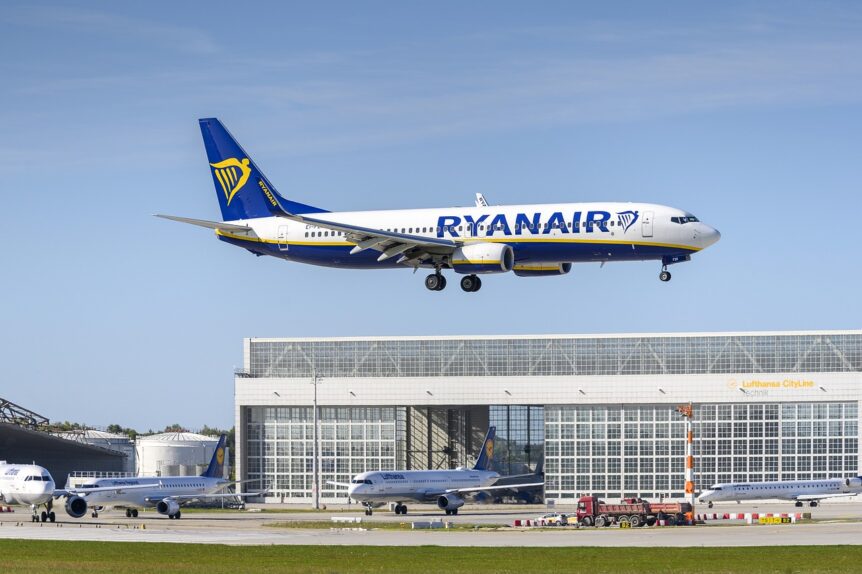
    Of the last few flights I’ve taken, they all seem to have been late by a prescribed amount, around twenty minutes or so. And, like that traffic blockage ahead that we’ve all sat in and once it’s cleared there’s no accident or apparent reason for it, late flights are much the same (to this layman at least). Our recent flight back from Santorini wasn’t any different. After clearing security and reaching the departure lounge in good time, the place was virtually empty, save the odd vendor behind the counters of the horrendously overpriced shops, and a few fellow travellers awaiting the flight back to East Midlands.

    Image by Jan Vašek from Pixabay

    The departure board announced ‘Boarding at Gate 5‘. We duly walked the length of the terminal (you’re never departing from the nearest gate, are you?). Arriving at Gate 5, we are confronted by an electronic sign announcing ‘GATE CLOSED‘. Where were we supposed to be? The departure board was showing ‘5’. Gate 5 was showing ‘CLOSED‘ no officials about to ask and the Tui app was about as useless as a Baldy’s comb. So everybody was milling around looking lost. About 25 minutes before the supposed departure, three staff turn up and open Gate 6. There is a mad and disorderly rush to get to the front (I’ve never understood this, as everyone has a designated seat) and, much to my surprise, everyone has boarded and the aircraft door is closed with five minutes to spare. Looking good, eh? Er, actually no!

    We sit there for 5, 10, 15 minutes. The smarmy flight Captain comes on the tannoy: “Uuuuuum, this is the Captain speaking. We’re uuuum just waiting for the instruction to push back, and we’ll be uuuuum on our way”. WHY??? There are no other flights in frikkin’ operation at the moment! It’s like Air Control are tittering down their sleeves seeing how long they can hold the plane before the passengers are on the verge of mutiny! We eventually trundle onto the apron and stop once again for another ten minutes. “Ummmm, we’re just awaiting a departure slot from Air Control and we’ll soon be on our way”. YOU’RE TAKING THE PISS! There’s no other aircraft within sting missile range, never mind in our flight path!

    Image by JUNO KWON from Pixabay

    The uneventful flight took just under the predicted 4h:10m and by the time we landed, we had made up the 20-25 minutes. I’d cooled off a bit by now and thought we might even get our planned Skylink shuttle bus from EMA to Nottingham. Yeah, right! Immediately on stopping, everybody jumps to their feet and retrieves their bags and stand like coiled sprigs, determined to be first off and onto the terminal shuttle bus. The ground crew efficiently approached the ‘plane with the steps and the cabin doors opened. And again we waited, and waited, and waited. Another smarmy announcement: “Uuuuuum, we’re sorry about the delay, but we’re waiting for the uuuum shuttle buses to take you to Arrivals”. WHAAAT? Like they didn’t have enough feckin’ notice? Why didn’t someone ring through four hours ago when we took off? No. Too simple, and probably designed just to piss you off even more.

    So we disembark the aircraft and board the shuttle buses. Packed like sardines isn’t the phrase to use, more like a tin of mashed-up frickin’ tuna. We eventually move off and I check my watch – we may still just about have time to catch the Skylink to Nottingham. The shuttle reaches the arrivals building, but rather than drop us at the entrance door at the corner of the edifice, the driver takes us to the far end of the covered walkway, about 300 yards away, and we have to walk back along the length of the corridor. WHY? AAAAARGH!!! Again, I bet the drivers are pissing their pants with laughter watching all the passengers struggle with all their luggage for a few hundred unnecessary yards.

    Image by Joshua Woroniecki from Pixabay

    Despite ours being the only flight at the terminal at this time of night, the sheepherding tape and bollard system was in place, requiring all the passengers to walk ten times further than really necessary. Then you get to the passport scanners. The capacity of a Boeing 737 is about 210 passengers and East Midland Airport have four scanners. FOUR! They don’t need four! They need fifty frikkin’ four!!!! All designed to wazz you off to the max, I’m sure. We eventually reached the Skylink bus stop – you guessed it – about twenty minutes late and had to stand in the rain for another forty minutes.

    I understand this is the norm of flight travel now, but there has to be a better way, doesn’t there?


    Featured (header) image by Dirk Daniel Mann from Pixabay
  • Santorini: A Paradise Lost to Tourism.

    Santorini: A Paradise Lost to Tourism.

    The Belvoirs recently had a week’s break on the Greek island of Santorini. This island destination was the first ever place I’d taken a foreign holiday, about 37 or 38 years ago (I remember the Beasty Boys were the baddies of the day, in the charts at the time), so I was interested to see how it had changed over the years. The short answer, I’m afraid, is that mass tourism has taken its toll to the detriment of its heritage. OK, the crowds have made the island wealthy, but at what cost?

    The yomp from Fira to Oia.

    For those that don’t know, Santorini is a volcanic island that blew itself apart in the year c.1645BC. The new volcano that grew back out of the sea, Nea Kameni is still active today. The cliffs around the remaining caldera afford magnificent views of the island. Consequently, the island is one of the most popular destinations in the world, attracting millions of tourists every year. The island is famous for its stunning views, unique architecture, and rich history. But behind the picture-perfect postcards, there is a dark side to this paradise: litter.

    Litter is everywhere on Santorini, from the beaches to the streets, from the caldera to the vineyards. Plastic bottles, cigarette butts, food wrappers, and other waste items are scattered all over the island, creating an eyesore and a health hazard. The problem is so bad that some locals have dubbed Santorini as “the Island of Garbage”.

    How did this happen? The main culprit, I’m told, and I’ve no reason to doubt it, is over-tourism. Santorini has been overwhelmed by the sheer number of visitors, who often leave behind their rubbish without any regard for the environment or the local culture. The island’s infrastructure and services are not able to cope with the demand, and the waste management system is inadequate and inefficient. According to a recent report by the EU’s transport committee, Santorini is failing to manage the increasing numbers, spelling disaster for the local community and the environment, and putting the future of the destination at risk.

    Another factor is the lack of awareness and education among tourists and locals alike. Many people do not realize the impact of their actions on the island’s fragile ecosystem, which is made entirely of volcanic rock. Some people simply do not care about preserving the island’s beauty and heritage, and only see it as a backdrop for their selfies and Instagram posts.

    My ‘Marco PoloGuide to Santorini tells me that there are 120 people employed on the island to pick and collect litter. I’d personally sack the entire lot of them as the place is covered with litter everywhere. It’s appalling to see, but sadly it’s endemic to the human race and I think the entire planet is truly f***ed.

    We based ourselves in the small village of Pyrgos, situated on the highest point in the middle of the Island. This charming little villa was away from the hordes of tourists and afforded magnificent views over the caldera bay.

    A Bus-ted Dream

    Santorini may be a dream destination for many travellers with its breathtaking views, white-washed houses, and blue-domed churches. But there is one thing that can ruin your Santorini experience: the bus system. The bus system in Santorini is chaotic, unreliable, and frustrating. It is supposed to be the easiest way to get around the island, but it often turns out to be the opposite. Here are some of the problems you’ll encounter when taking the bus in Santorini:

    The buses are always late. The bus schedules are more like suggestions than actual timetables. You can never be sure when the next bus will arrive or depart. Sometimes, the buses don’t even show up at all. The schedules, for what they’re worth, are just a header with ‘from’ and ‘to’ destinations and a column of times. They have no meaning as they don’t tell you the name of the bus stops on the route, or what time they stop there. The timetables don’t even refer to a service number to tie it to a particular bus, so you are reduced to just milling around with other clueless passengers until a bus turns up. Even then, it’s not obvious where the bus is going, unless you can coax the driver or conductor into revealing this, I would consider, vital information.

    The buses are always crowded. They’re not designed to accommodate the huge number of tourists that flock to Santorini every year. They are often packed like sardines, with people standing in the aisles and squashed up against the doors. You can forget about personal space or comfort. You can also forget about finding a seat, especially if you have luggage or a backpack.

    Nothing about the system is user-friendly or well-organized. There are no signs or announcements to indicate which bus goes where or when and sometimes, the drivers change the routes or destinations without warning or explanation.

    A birds-eye view of the ‘station’.

    The main bus station (or rather, parking lot) in Fira is utter, utter chaos. The ticket/information office is unmanned (or it was on all of my visits), and the so-called timetables give no information except a column of meaningless times. Nobody knows which bus is going where until the driver places a tatty placard on his dashboard, approximately 16 seconds before he sets off. You wander from bus to bus, asking drivers or conductors which bus is which. If you’re lucky you will get a shrug of the shoulders or a wag of a finger. Mostly, you just get ignored. Nobody is there to help you, and nobody wants to help you. And then miraculously, approximately six seconds to departure, the conductor gets all smarmy and answers “Yiiiiiiiis, yiiiiis, of course, Pyrgos! Yiiiiiis”, like you’re an ignorant dummy and this information is freely available elsewhere.

    The bus station itself is insanely dangerous with busses swinging in and out, with no barriers or pedestrian control, people milling around, paying more attention to finding out their bus rather than getting out of the way of the coach that’s reversing into them without warning or care. It’s a wonder that nobody gets killed (maybe they do), and the station’s location and the bus system in general need a major overhaul.

    The network does not cover all the places you might want to visit on the island. There are only a few routes that connect the main towns and attractions, such as Oia, Akrotiri, Kamari, and Perissa. If you want to go somewhere else, you have to take two or more buses, which can be time-consuming and of course more expensive. Some places are not accessible by bus at all, such as some of the beaches, wineries, or hiking trails.

    So what are your alternatives? If you want to have a hassle-free and enjoyable Santorini trip, you might want to consider renting a car, hiring an ATV (Quad Bike) – although I have more to say about these later – paying for a taxi, or renting a motorbike. These options cost a lot more than taking the bus, but they will give you more flexibility, convenience, and comfort.

    On the plus side, the buses are very cheap!

    Fira town from above.

    You can always walk, of course, and due to the compact size of the island, walking between towns is eminently feasible, if you have average fitness. Mrs Belvoir and I walked several journeys, including Pyrgos-Fira, Fira-Oia, Pyrgos-Kamari-Perissa, Pyrgos-Megalochori and Pyrgos-Akrotiri, although the Fira-Oia coast walk and the climb over the Mesa Vuono from Kamari to Perissa can be particularly taxing and hard on the feet. A big word of warning though: The roads are, in the main, unlit and the vast majority have no sidewalks so walking between destinations can be dodgy even on quiet roads and downright dangerous on main roads, especially at night. Some of the tracks between smaller villages such as Perissa, Pyrgos, Akrotiri and Megalachori can be cobbled back alleys but some can be just unmade dirt tracks. Be sure to pack some sturdy footwear!

    I don’t mean to paint a bleak picture of the island. It has undoubtedly breathtaking scenery, the likes of which you’d have to spend a lot of money and travel many miles to see elsewhere. Sure, the place is generally crowded and expensive, but there are little villages where, although there are tourists, it’s much less intense. And if you use little family-run Tavernas you’ll save a bunch of money compared to the tourist traps of Fira and Oia, whilst supporting the local businesses.

    Magnificent backdrop of Kamari Beach.

    The most relaxing place we found was a little beach shack, Kamara Beach Bar, a short walk beyond the not-so-posh but still expensive eateries of Kamari Beach. Certainly not gourmet food, but inexpensive and substantial snacks and sandwiches and reasonably-price beer (if only main-stream bottled lagers) and great value hand-mixed cocktails for those so inclined. We whiled away several hours here just staring out to the sea and enjoying the eclectic mix of reggae and 80’s rock being played through a better-than-average sound system.

    Kamara Bar – Cheap and cheerful.

    We’d actually walked here from our base in the village of Pyrgos, with the intention of taking the cheap (€5pp) water taxi around the big lump of rock that was Mesa Vuono to the village of Perissa. This service was supposed to run every 15 minutes, but after an hour, we’d seen no signs of activity. It turned out that the weather was too windy and it had been suspended for only the second time this year. Just our luck! As previously mentioned, we went up and over the Mesa, a trek that I wouldn’t recommend and have no intention of replicating for the rest of my pathetic life!

    All about the beer? Sadly not!

    Yeah, Santorini’s no craft beer (or any other beer for that matter) hot spot. But amongst the numerous restaurants and bars selling the ubiquitous Mythos, Alfa and other assorted mass-produced dross, there are two breweries that are trying to break the mould, namely the now well-established Santorini Brewing CompanyEpiskopi Gonias 847 00, and the new boys on the block, FtleosKarterádos 847 00.

    All the beer from the Santorini Brewery is unfiltered and bottled. Apparently, they tried to sell keg products to bars when they first started production, but the bar owners had difficulties serving ‘craft’ beer on draft, so the decision was made to make output bottled only. This is also true of the bar in the brewery’s own tap room. The decision seems to have paid off, with many smaller bars and even supermarkets stocking a least some of their ‘Donkey’ range of beers. Their entire output is limited to a core range, consisting of three ‘lagered’ pales, an amber, a barrel aged, one wheat, one weisse and a saison. I tried the Yellow Donkey pale, Crazy Donkey IPA and Salty Donkey gose. All were perfectly acceptable, if unremarkable.

    Donkey beers at Santorini Brewery.

    The Ftelos Brewery, on the other hand, seems like it is genuinely trying to shake the beer scene up on the Island. Starting up just a couple of years ago in 2021 (basically in the middle of the C-19 pandemic) it has a purpose-built, highly impressive set-up situated just off the main road just south of Fira.

    As well as producing a diverse range of styles, it also has a gourmet kitchen and restaurant area, and it’s speciality is food-beer pairings, with a flight of six of their (draft) beers, together with a platter of light-bites, each one complimenting the beer it’s served with. I had every intention of returning here to sample this, but circumstances meant unfortunately that wasn’t to be. However, I did get to sit on the magnificent grassed roof terrace and try their Blue Monkey Pale Ale and Malt ‘N Marvel -Double IPA Hoppy Series, the latter of which was surprisingly good and would hold its own against a lot of other current European craft brewers.

    Massive investment at Ftelos.

    Sadly, I had the feeling that this place was in the wrong location, being out in the middle of nowhere on its own. The proprietors have obviously made a massive investment in the place and I hope they have the funds to sustain its growth in the coming years and expand the availability of their beers into the surrounding towns and villages, as Santorini Brewery has done.

    Wine is fine.

    If beer’s not your bag, man, then Santorini has no less than 22 domestic wineries. We stumbled in on one during our walk around the quiet village of Megalchori. Gavalas WineryMegalochori 847 00, produces around 70,000 bottles per year, mostly from grapes native to the island.

    Gavalas – one of the 22 wineries on Santorini.

    On our walks around the island, grape vines are evident everywhere. The plants are cultivated under baskets to keep them low and spread out to protect them from the island’s frequent and strong winds.

    Even so, it was hard to imagine that, with 22 wineries, there were enough grapes to go around and for each one to output 70,000 bottles per year.

    It’s no doubt that Santorini is one of the richest Greek islands. But this wealth comes with a big environmental price. The beauty of the island is somewhat blighted by the amount of tourist visitors. The serenity that I experienced all those yours ago has been destroyed, with the constant rumble of Quad Bikes pervading the whole island, often into the small hours. The fleets of tour coaches and cruise liners keep their engines running constantly, polluting the air and the cars and mopeds clog up the picture-book cobbled streets of the towns. It’s all very sad. This is now typical of many tourist destinations; In Europe Venice, Pisa, and Bruges are among destination towns looking at ways of reducing tourist hordes whilst still reaping the benefits. I’ll be interested to see what solutions they come up with, if any.

    Some further pics from our Santorini break below.

  • When Will We Learn?

    When Will We Learn?

    Watching the troubling, distressing and very worrying news from the Ukraine on TV in the last couple of days, I can’t help wondering ‘When will we learn?’

    Invasions of entire Nations, certainly in modern history, don’t work. Just look at Germany & Japan in WWII, Iraq in Kuwait, and more recently the US/UK in Afghanistan. All failures. I won’t drone on and pretend to know all the details and technicalities of why wars start and how they are won and lost. I’d just like to know why we don’t learn from history.

    Most creatures on this Earth (us included) are fiercly terratorial. It’s in our nature. Call me naïve, but I’d like to think that, as a speices, humans can rise above this and strive for cooperation, peace and prosperity. Doesn’t the World have more pressing issues to worry about, such as not having a planet to fight over at all if we don’t do something about the climate, overpopulation and food shortages.

    I despair for the future.

  • The end of the World, as we know it?

    The end of the World, as we know it?

    …so go the lyrics of the REM song. It’s a long time since I’ve posted on this blog, so I thought I’d do an update now I’ve a bit of time owing to the enforced ‘holiday’ most of us are having at the moment.

    Surreal times indeed! Who’d have thought, only a month ago, that most of the world would be shut down and the global economy imploding in on itself? This is only the start of day 4 of ‘lock-down’ in the UK and my household’s doing OK, but many aren’t and but it’s hard to predict what people’s attitude to society will be when we get through this. I’m trying to stay positive, as I always do, but for sure the world will be a very different place when the all-clear is given.

    There are positives already:
    No-one has turned into zombies – Yet.
    The air is fresherPollution levels have dropped drastically as planes are grounded and vehicles stay off the road all around the world. This must surely demonstrate what is achievable to combat global warming if we all act collectively.
    Nature is reclaiming itself – Within days of lock-down, animals have started to enter cities looking for food and, for the first time in living memory, the canals of Venice have cleared and wildlife is coming back to the city. This must make us think again how we co-exist with nature rather than trampling everything under foot. They were here first and will surely outlive us!
    Attitudes will change – The world has never seen anything on the scale of what is happening now and it will hopefully make people realise how fragile the human race really is. We are not invincible. This will not be the last virus to sweep the globe. Hopefully lessons will be learnt and next time we will be more prepared for it.
    People will come together – This crisis should make people realise we are all the same, regardless of race, politics or religion. I sincerely hope that people will come to appreciate all the things that we take for granted – a visit to the pub, going to  a concert or football match, sharing a meal with friends. I hope they will become more grateful of what they do have and society in general becomes less materialistic and kinder to each other. 

    Maybe I’m being a bit naïve here, but I’d like to think a lot of people’s fundamental outlook on life will change, at least for a generation or two.

    I was reading an article a couple of weeks ago in which scientists are saying that the first human to live to the age of 1000 years has already been born. 1000 years! Can you imagine that? The world is on the verge of being over-populated now. How could the the planet possibly survive if everybody was living to 1000? I’m glad I won’t be part of it.

    As Roy Batty (Rutger Hauer) in Blade Runner said “The light that burns twice as bright burns half as long”. Let’s all be happy with our lot.

    Image by Pixabay

  • Beertastico Roma!

    Beertastico Roma!

    Right, this isn’t a normal GOTBlog post as it’s about my recent visit to Rome. As it’s supposed to be a grumpy blog I’ll get the whingy bits out of the way and then post some nice bits for a change!

    First up, Rome is old, old, old. A bit like me. And needs a bit of TLC. A bit like me. It’s a dirty city. Lots of the streets, roads and buildings are just mucky and in disrepair. And they stink. Of piss. A bit like…

    The drivers are maaaaad! They don’t indicate, cars and bikes chop each other up like it’s a sport. They don’t stop at pedestrian crossings – even when the ‘man’ is on green, and they park everywhere. Every street is jam-packed with parked vehicles on both sides of the road. Thousands and thousands of cars and bikes parked every conceivable way. Nose-to-tail (with no possible way of exit), sideways, crossways, double-parked, triple-parked, parked on corners, on crossings and at traffic lights, you name it. There seems to be no parking control whatsoever, although like pedestrian crossings, there might exist some kind of system I couldn’t fathom.

    Right let’s get one thing straight. Rome is a big city. By that I mean the buildings are fucking HUGE! There are absolutely no small buildings in this town. No Sireee! It’s as though the council, when considering new building applications look at the blueprints and go ‘Well it’s nice enough, but we’re only going to pass the plans if you add another two million bricks and 120 feet to the height’. It’s big. Consider the Colosseum, built almost 2,000 years ago before JCB and Wimpey’s (the building firm, not the burgers) had been invented. The scale of it is breathtaking, as is a lot of the more modern architecture in this city. There is some BIG shit in Rome! It’s B-I-G, geddit? Now, having got the bigness over to you, it is a big city in size but also fairly compact. It’s very easy to get around by bus and tram, including a hop-on, hop-off service but I’m not writing this as a travel guide, so you can piss off to the Lonely Planet website for that.

    Despite its bigness, it is easy enough to get around by foot (minding the maaaad motorists on the way) and we elected to walk everywhere, preferring to explore all the back streets (of which the are hundreds) on the way. Don’t bother with maps, just use Google. Forget about your personal privacy and giving Google all your data. Give ’em everything, including your car, old dying granny and your inheritance. They’re worth it! Just punch your destination into Google Maps and follow the arrow!

    Now on the subject of the post; We were only here for the beer! Italy has a surging craft beer scene that has been emerging over the past few years (they have gone from about 70 breweries eight years ago to around 650 today) and several bars are spearheading the revolution by supplying domestically brewed and imported craft beer on draught (including brew-pubs), plus  imported bottled beers and even some local and British real ales served on hand pump.

    A short period of research on Google – love them guys 🙂 – Gave me a short list of no less than nineteen pubs to find and visit:

    1. Baguetteria Del Fico – Della Fossa, 12, Roma
    2. Bir & Fud – Via Benedetta, 23, Roma
    3. Birra Più – Via del Pigneto, 105, Roma
    4. Blind Pig – Via Gino Capponi 45, Roma
    5. Brasserie 4:20 – Via Portuense 82, Porta Portese, Roma
    6. BrewDog Roma – Via delle Terme di Tito, 80 (Via del Monte Oppio), Roma
    7. Brigantino – Via San Martino ai Monti 50a, Roma
    8. Domus Birrae – Via Cavour, 88, Roma
    9. Donkey Punch/Nel Buco del Mulo – Via della scala 33, Roma
    10. Emporio Alla Pace – Via della Pace, 28, Roma
    11. Fass & Cask – Via Fanfulla da Lodi 3A, Roma
    12. Hopificio – Piazza Cesare Baronio, 2, Roma
    13. Hopside – Via Francesco Negri, 39, Roma
    14. Knick Knack Yoda (Dal Papa) – Piazza Risorgimento, 11, Roma
    15. Ma Cha Siete Venuti a Fà – Via Benedetta, 25, Roma
    16. My Ale – Via dei Cappellari 79, Roma
    17. No. Au – Piazza di Montevecchio, 16, Roma
    18. Open Baladin – Via Degli Specchi, 6, Roma
    19. Sinister Noise – Via dei Magazzini Generali 4a, Roma


    Here’s a breakdown of our beery adventures.

    WEDNESDAY 31/08/16

    Having spent most of the previous day travelling, this was our real first day in Rome. As we’d pre-booked tickets on-line to avoid queues at the Colosseum, we thought we’d get this obligatory visit out of the way. What a day! A massive and absolutely torrential  thunderstorm caused everybody to take refuge inside the Colosseum arches and we were packed like sardines. The resourceful street vendors outside swapped their goods from selfie-sticks and hats to ponchos and brollies, selling them through the railings to the drowning people inside. Being a right tight-arse, I decided to drown.

    The beerheightometer at BrewDog Roma.

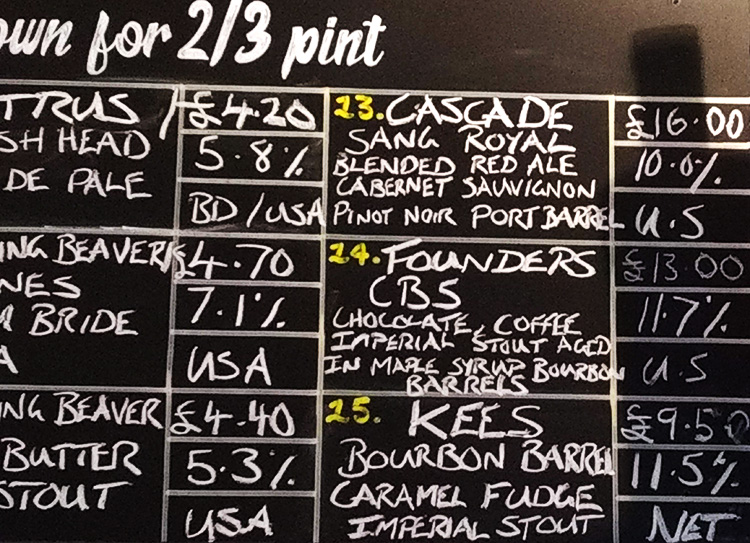
    After a soggy visit we found the very near-by BrewDog Roma [6] in which to sit and dry off in. If you’ve ever been in any other BrewDog bar, you’d be in familiar surroundings. Standard BrewDog offerings in here, plus some Italian and American craft cousins on draught (tap). Sampled on this occasion were BrewDogAce of Citra at a piffling 4.5%, Vento ForteSession 20 at an even more girly 4.1% and an Oude Beersel – something or other at 9%. I’ll not bore you with tasting notes as it’s a very personal matter, suffice to say all were enjoyable other that the eye-watering price of 5.50 for a (questionable) 2/3 pint measure.

    One thing I did mention after we found this place was the lack of a prominent (‘swinging’ or otherwise) sign outside, as we had walked past once and not noticed it was a bar. This was to become a common feature (or lack of) in other bars we visited. Maybe it’s a condition of planning in these parts, along with the 2 million bricks and 120 foot high rules.

    Massive bottle selection at Domus Birrae.

    Anyways, having dried off somewhat and with the rain almost having abated, we went to explore the Roman Forum and Palatine Hill, adjacent to the Colosseum and included in the ticket price. There is so much to see here it’s just bewildering, too much to take in for my tiny little brain. So after about three hours we went hunting for beer again. We found it at Domus Birrae [8], not a bar but a bottle-shop in which you can sit and drink the beer you’ve purchased, albeit out of a plastic cup. The choice here was staggering. At least four (maybe five) double fridges packed with beers from around the world, including several from the UK.  There was also a warehouse with stacked shelves at the back. Selected beers here were a Dugges / Stillwater collaboration – Tropic Sunrise, a superb mango/pineapple/raspberry sour at 4.5%, followed by a BrewskiPassion Feber IPA at 7% which was totally hoptastico, mate. The young chap behind the counter was wearing a baseball cap the wrong-way round (I never understood that)  and seemed more interested in selecting a choice of punk/metal crossover music he was playing from his laptop but seemed pleasant enough. I showed him my pub list and he marked his recommendations and told us that Brigantino [7] and Sinister Noise [19] had closed, so they were duly crossed off.

    One of the pubs that reverse-cap man had recommended was the Fass & Cask [11] so we thanked him and set off for that, not realising how far a walk it was. Having recently sold my neighbour’s dog to them, I referred to Google again, who told me it was a 40-minute walk. Well, we either walk very slowly or Google are lying bastards, because it took us nearly an hour. It was a L-O-N-G walk through some very dodgy-looking areas. By this time it was getting dark and although we were never approached or felt threatened it was a bit unnerving. After passing it twice, due to no sign outside (again) we finally found the F&C down a side street and entered an empty pub. The two blokes behind the bar seemed happy enough to see us and although they told us their English was ‘not-ah too good-ah’ they seemed genuinely passionate about the beer they sold.

    Handpumps and (very frothy) beer at Fass & Cask.

    On the end of the bar there were three hand pumps, evidently two in use serving a ‘Stout’ and a ‘Pale Ale’. Because their English was not-ah too good-ah, we couldn’t get any more details from mein hosts. We ordered one ‘pint’ of each and they landed on the bar with a lovely three-inch head so we probably only got two-thirds measure. But hey, when in Rome…

    It was at this point when half a dozen folks came in and it was apparent they had good English, so I asked them about the beer. The chap I got talking to was Gabriele Monteoluro a freelance brewer, formerly of Birrifico Pontino, and who was obvious in his passion for beer. He told us that the beers in our glasses were from HilltopGallagher Stout and Pale Ale, and to be honest they weren’t half bad. Not the best cask beer I’ve had, but very acceptable. We had a good chat about beer styles and brewing before we supped up and left. The conversation was so engrossing that it wasn’t until we were half way to the next pub that I realised we hadn’t paid! It was a long way back so I contacted the Fass & Cask through their Facebook page to own up and apologise and offered to send them the money via PayPal. The next day they got in touch and said ‘No problem, the beers are on you when we visit your pubs’. Result!

    Bar at Birra Più. The ‘cellar’ is the silver cabinet on the left.

    Next stop was Birra Più (or Birra +), another small place, just off the main road. All keg taps here, but what a choice! First up: L’OlmaiaBrown Sugar, a DIPA at 6.5% which was absolutely superb, even if it did cost 5. The next up was SixpointDouble IPA, this time at a mere 9% and the last of the night. The keg ran out whilst pouring this one and it was given free. Brucie bonus! We watched the barman change the keg, located in a tiny cabinet beside the bar containing maybe three or four other KeyKegs, which made me aware of how little space you actually need for a set up like this.

    Time for the long walk home, this time via a different route (and less dodgy – or maybe I was so spannered that I didn’t give a toss by this time?), courtesy of my mate Google.

    Rome route map
    Wednesday’s route.

    THURSDAY 1/9/16

    Frontage of Bir & Fud.
    Frontage of Bir & Fud.

    After recovering from the previous day’s walk (8 miles – according to me bezza mate Google), we set off on foot again to do a bit more touristy stuff – Trevi Fountain, The Vatican to see the Pope (he was out, despite us being in town. I’m assuming nobody let him know), Pantheon and all that kind of thing, and it was soon time for beer. We headed off over the River to the Trastevere district of Rome, a cobbled maze of medieval streets which hosts numerous cafés and bars. First on our list was Bir & Fud [2]. Guess what they sold? Yep! The long and narrow room opens out to the street. Along one side, a bar takes up the whole length of the wall, on top of which sits 30 taps for the craft offerings and six hand pumps for the casks at the back. Enormous choice here, but I only sampled two: ReichenbrandOriginal Ritterguts Gose at 4.7%, and Brewfist2Late, a stupendous 9.8% DIPA. We also ordered fud – tip: don’t order chips, you get crisps.

    Beer menu at the Ma Cha Siete Venuti a Fà.

    Literally across from the B&F is another fantastico little bar with the snappy and memorable name of Ma Cha Siete Venuti a Fà [15], which, I was told by the barkeep, means ‘What the hell have you come here for?‘ Again, tiny in size but big on choice, this time with 13 taps and three handpulls. Here I only had time for one so I opted for another Italian craft brew; MontegiocoMC Mummy, a 5% peculiarly tasting peated sour beer. It was like a cross between a Rauchbier and a Lambic and nothing I’ve tasted before, but enjoyable nonetheless.

    Table for two at the Donkey Punch.
    Table for two at the Donkey Punch.

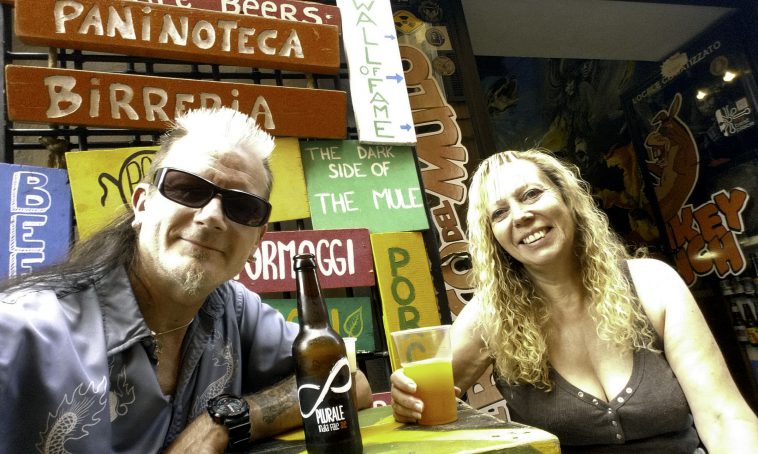
    Next on the hit-list was the fantastically named Donkey Punch (Nel Buco del Mulo) [9], which basically is a sandwich shop with a fridge full of fabbo beers. This place was tiny but full of character and had  brilliant mural painted on the wall opposite the counter depicting rock heroes past and present. I selected a bottle of PlurealeIndia Pale Ale 7%. We sat at the tiny table for two outside and sipped from our plastic cups people watching and waiting for the heat to drop a little. The sun was getting lower, the day a little cooler, so it was time for the next pub, which was a half-hour walk.

    Great service and selection at Brasserie 4:20.
    Great service and selection at Brasserie 4:20.

    We trudged down a long and pretty characterless road, which appeared to be the motorcycle-shop centre of Rome and eventually arrived at Brasserie 4:20 [5] around 6.30 and although the doors were open, the pub didn’t until 7pm (Google told me it opened at 6. What does he know, useless twat!) However, the very friendly barchap welcomed us in and served us anyway. Another amazing selection here, 17 taps and no less than 12 hand pumps. Here I sampled two, both from Vento ForteFollower IPA 7.1% and DIPA at 8.5%. I also felt compelled to sample the food menu as they served ‘hopburgers’ – a Chianina beef burger, cooked to perfection, with a sprinkle of hop flowers on the top. Very tasty nom noms. It was a fair walk back to the hotel so we decided to call it a day.

    Rome route map
    Thursday’s route.

    FRIDAY 2/9/16

    I found the White Horse at the bottom of one of my pints.
    I found the White Horse at the bottom of one of my pints.

    After some more obligatory sightseeing we searched out No. Au [17]. After circling the block several times and finding no trace (which we didn’t find surprising, due to lack of signs outside), we asked a very nice young lady in one of the adjacent offices, who told me it was permanently closed. Poo. On to the next one, which was only two minutes away, Emporio alla Pace [10]. To our surprise, this wasn’t a bar at all, but a patisserie (that’s a cakey shop to you) that sold beer. No apparent outlets behind the counter, but we spotted a fridge which was stocked with a small but interesting range of bottled beers including BrewDog, Buxton and Adnams from the UK. I went for an Alta QuotaPrincipessa, a farmhouse/saison style at 5.8% which was a little on the thin side but tasty enough.

    We had to have a compulsory gelato (ice cream) – well, it was a blistering 33 degrees by now – on our 15 minute walk to the next bar. This ice cream was apparently made from pig’s milk and was supremely thick and creamy. But at 5 a tub I should frikkin’ expect so! I half-expected two trotters sticking out of it for that price but all I got was a sodding little plastic spoon. We set off to find My Ale [16], but when we found it, it was a tiny food shop (selling beer) with nobody in there, so we gave it a body-swerve and headed onward.

    Jaw-dropping selection at the Open Baladin.
    Jaw-dropping selection at the Open Baladin.

    Next beer stop was Open Baladin [18], a BrewDog-like bar situated on the corner of a quiet, faceless street, again no signs outside and we walked past it without noticing and had to double back. The exterior of the Baladin held no clue as to what lies within. You walk into this place and are immediately faced with a long bar containing no less than 35 – yes, 35! taps, three hand pumps and an entire wall lined with bottled goodies.

    I tried three from the tap in here: Lucky BrewsApollo 4.9%, golden and hoppy, CR/AKMundaka pale ale at a mere 4.8%, which was darker than I expected, but tasty nonetheless, and Free Lions (on me shirt) – Lo Straniero, an absolutely superb 7.7% American IPA with a fantastic nose and citrus flavour. Pinch me, I must-ah be in Heaven-ah! Whilst I was in Open Baladin, I was Facebooked by me mate Stuart of the superb North Riding Brewery, tipping me off about a pub that wasn’t on my list, the curiously named Tree Folk’s (their apostrophe, not mine!). Time was again marching on so we decided to make a move and give it a visit on the way back to the hotel.

    Array of hand pumps at Tree Folk’s. And another reverse-cap man.

    A half-hour walk past the Colosseum and other most awesomely impressive architecture (did I mention Rome’s buildings are fookin’ HUGE?) and we arrived at Tree Folk’s [20] and this time we spotted it from the end of the street as it actually had a swinging sign. These things could catch on! As soon as we entered we saw that they had eight hand pumps and were actually selling British cask ale! On our visit they were only four cask beers featuring one brewery – Celt Experience – and I tried all of ’em: Castro Mosaic 3.8%, Dark Age 4.0%, Battle of the Trees 5.9% and Galaxy Equinox at 5.6%. To be honest, the quality was pretty average and they all tasted tired, but as they were playing Metallica and Pantera on the sound system, I felt quite at home and enjoyed the visit.

    Cask beer alive and well in Rome.
    Cask beer alive and well in Rome.

    One thing that was a very apparent problem with cask beer in Rome was the dispense. One of the beers in Tree Folk’s took about ten minutes to serve a half (or ‘small’) beer. The barman must have pulled the hand pump at least thirty or forty times, beer was fobbing all over the place and he scraped the head off with a spatula three or four times, letting it settle in between scrapes. How much he lost in the drip trays to dispense a half, I can only weep at. Finally after getting a half(ish) glassful, he sponged around the outside of the glass (including the head!) and handed it over. Nice!

    The problem of fobbing and poor dispense seemed common in all the bars where I tried the cask beers, so it seems to me they need some technical advice. It wasn’t coming from me – I was on holiday and I ain’t a busman.

    Rome route map
    Friday’s route.

    SATURDAY 3/9/16

    I think the GBG' gang beat us here.
    I think the
    GBG’ gang beat us here.

    By Saturday we had done most of the sights – it’s difficult not to – you just ‘happen’ upon them, there’s that much to see. So we decided to revisit the Trastevere area and of course the best thing to do in 34 degrees of heat is climb to the highest mother flippin’ point in Rome, the Gianicolo Hill. Did I mention it was hot? The views from up here are spectacular though and we rewarded ourselves at the top with a nice sit down for ten minutes before trudging down again. To the pub! Our proper reward was waiting at the aforementioned Bir & Fud, where I had an EastsideSunny Side, another superb 7% Triple IPA. Take it from me – the Italians are brewing world-class beers!

    Rock 'n' Roll hall of fame at the Donkey Punch.
    Rock ‘n’ Roll hall of fame at the Donkey Punch.

    Back to the riverside and walking adjacent to the Tiber and past St Peter’s Square in Vatican City – there were literally tens of thousands of people walking around. It’s mind-boggling to think how much money is going into the church on a daily basis and to me it smacks of hypocrisy – brought us to the delightfully named ‘Knick Knack Yoda‘ [14], again with a tiny frontage and no sign outside. This isn’t a bar per se, it’s actually a burger/pizza joint that brews its own beer. I asked for details of the brews, but again the chap’s English was not ah too good ah. I was offered IPA, Pils or Weiss. I opted for IPA which was full-bodied and maltier than previous Italian IPAs I had tasted, but it was nothing more than OK. I couldn’t glean any other information on the beers other than my IPA was 6.8% so if anyone can enlighten me on KKY beers, please leave feedback in the comments form below. Evidently KKY also runs a record label specialising in electro/punk crossover music, so there’s a lot going on with this small business. Good luck to them.

    Just a side note, it wasn’t until we arrived back in the UK that I read that Mother Teresa had been canonized this day, so that’s why there were so many people around. We had been part of it and not even realised!

    Frontage at the Tree Folk's. Oooo look - a sign!
    Frontage at the Tree Folk’s. Oooo look – a sign!

    A short detour on the way back to the hotel took us back to Tree Folk’s for another half of Celt Experience (I think he was still pulling it from the evening before). Then onwards and into BrewDog Roma for our second visit of the holiday to end the evening. It was HOT in here. I needed something to cool me down so I opted for an Eastside – Sunny Side 7% (already sampled at the Bir & Fud), Rurale3° Miglio, an American Pale at 5.8% and to cap the night off, Dugges – Tropic Thunder a stupendously good 4.5% mango, passion fruit and peach sour. Perfect 10! Nighty night.

    Rome route map
    Saturday’s route – I think that ‘spike is a Google fuck-up.

    SUNDAY 4/9/16

    This is how they deliver wine in Rome. No messin'.
    This is how they deliver wine in Rome. No messin’.

    Last day here and we had to leave for airport at about 5 o’clock so we planned a lazy day trying to keep cool before the flight. Yeah, right! Despite it now being a scorchio 34 degrees, we decided to make the long walk back to Trastevere to take lunch at one of the numerous (and reasonably priced) restaurants there and then some beer whilst we watched Lewis Hamilton win the Italian Grand Prix. We found a nice little eatery, La Casetta di Trastevere, where I tried a spag bol which was very tasty and there was so much that I couldn’t finish it. Then around the corner to Ma Cha Siete Venuti a Fà once more for beer whilst watching the race.

    Well, Lewis muffed the race but that didn’t stop us sampling some great beers: Rurale – Seta Special 5%, a refreshing Witbier; Eastside – Sera Nera 6.5%, a fantastically hoppy Black IPA and finally a CantillonRosé de Gambrinus 5%, a beautiful Lambic Framboise from Brussels topped the afternoon off nicely before a slow walk back to the hotel to pick our bags up and then catch the bus to the nearby Ciampino airport for the flight home.

    Rome route map
    Sunday’s route.

    A wonderful and welcome break and a city I will definitely revisit some day (I still have four pubs on my list left unvisited!). All-in-all a fantastico break, if a bit tiring. Rome, quite apart from the beer and smelling of piss, is a splendid, vibrant city and highly recommended. If you’re a bit of a beer geek then it’s even better. If you’re a beer geek and into architecture, you’ll cream yer pants. Probably.

    Thanks to Steve Westby for some pre-visit gen and for a bit more serious reporting of the Italian craft beer scene, read this article.

    Find me on Untappd
    Some tinnies wot I have necked.
    And some further pics from Rome below.

  • Horsin’ around

    Horsin’ around

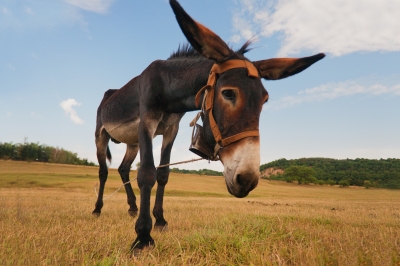
    In a mad half hour down the pub today, we were discussing the difference between an Ass and a Mule. Don’t know? Well, I’ll tell you.

    An ass is the same as a donkey, a mule is a cross between a (male) donkey and a (female) horse.

    Then we got to thinking what other crosses you could have and came up with some interesting equine cross-combinations…

    • Mule/horse = Morse
    • Horse/donkey = Honky
    • Mule/ass = Mass
    • Mule/donkey = Monkey
    • Horse/ass/donkey = Hanky
    • Mule/ass/donkey = Manky

    Bringing a Zebra into the (ahem,) mix we could get…

    • Zebra/donkey = Zonky
    • Mule/ass/zebra/donkey = Mazy

    There must be many more amusing combos. Add yours to the list!

    Image courtesy of Evgeni Dinev at FreeDigitalPhotos.net
  • No Coming Back!

    No Coming Back!

    Apparently the Mars One Project (www.mars-one.com), a one-way mission to Mars with no hope of return, has attracted a total 202,586 volunteers wanting to make the journey of a lifetime.

    This number will be whittled down to a shortlist of just 40 from which the four lucky (?) candidates will be chosen to then undertake seven years of intensive training, ready for the first one-way mission scheduled for the year 2024.

    The estimated cost of sending the first crew of four to the Red Planet is $6 billion. That’s currently about £3.51 billion, or £877,500,000 each.

    Don’t they realise if they’d paid just 10p more, they could have had a return ticket?

    Picture source:
    Credit: Mars One / Bryan Versteeg.

  • Get a grip on it!

    Get a grip on it!

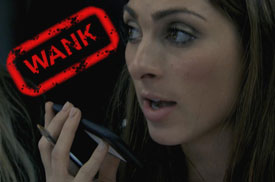
    TV and films have got a lot to answer for, see examples in my previous posts regarding the Hollywood swallow and computer noises – to name just two. But today I’d like to bang on about the way people hold some objects on the telly. There is obviously the correct way of doing things, and the TV land way. Here is a simple visual guide of getting to grips with things.

    1. Mobile phones.

    phone-proper


    phone-wank


    2. Torches.

    torch-proper


    torch-wank


    3. Hand guns.

    gun-proper


    gun-wank


    gun-wank-2


    4. The popular torch/hand gun combo.

    gun-torch-double-wank


    Tip: There is no way to do this without looking like an utter twat.